
A Foreign Policy Failure
Trump’s Defeat in the Middle East

By Mitchell Plitnick
As Donald Trump navigates ending the Iran war without conceding defeat, American foreign policy remains suspended in an increasingly dangerous limbo.
When the billionaire real estate magnate first ran for president in 2016, many voters bought into the idea that he was not “a politician” and that they wanted a “businessman” to run the country.
We’re now experiencing the results of that flawed thinking.
Trump, of course, is not much of a businessman. He parlayed his inherited wealth into a long string of failed business ventures that left him bankrupt, through chicanery and a simple refusal to pay his debts.
But even if the president were more competent, he would still have been thoroughly unprepared for the job, particularly in foreign policy, an area where he has consistently displayed ignorance, hubris, and a complete lack of depth.
In Iran, Israeli Prime Minister Benjamin Netanyahu led Trump down a path of fantasy, persuading him that victory would be easy.
Now, the president finds himself in an intractable quagmire, desperately flailing to secure an agreement that doesn’t leave Tehran in a visibly superior position to the one it held before the war.
Trump has been unable to force Iran to allow free passage through the Strait of Hormuz, triggering a massive global energy and economic crisis that is worsening by the day.
Iran’s counterattacks have significantly harmed Washington’s Arab allies. Netanyahu is also facing domestic backlash for failing to convert the destruction caused by Israeli and American forces into tangible strategic and diplomatic gains.
But the costs of this ill-advised war don’t end in the Middle East.
Ripples of War in Asia
Last week, the White House informed Japan that shipments of Tomahawk cruise missiles Tokyo had already paid for would be delayed by at least two years due to the United States’ need to replenish its own stockpile.
This was just the latest example of disquiet in East Asia over Trump’s inattention.
While concerns that China might exploit Washington’s commitments in the Middle East and Ukraine to launch an invasion of Taiwan have not materialised, Beijing continues to assert its influence across the region.
Japan and South Korea have built their strategic plans on American support, which they can no longer count on. This was reinforced when Trump transferred the prized THAAD air defence systems from South Korea to the Middle East early in the war.
The move caused great uneasiness in Seoul, coming as it did at a time when North Korea was launching test missiles into the Sea of Japan, a threat to the South.
While launchers and other equipment might return to Asia after the war, assuming Iran does not destroy them, the US has expended about half of its supply of interceptor missiles to defend Israel against Iranian attacks.
The prioritisation of Israel far ahead of close allies like Japan and South Korea was accentuated by reports that the Pentagon expended far more of its defensive assets to protect Israel than Israel itself did.
South Korea has expressed its hostility towards Israel in unprecedented ways, harshly criticising the Jewish state for its treatment of Palestinians.
Yet it has done so by referring to incidents that were several years old and, later, narrowly focusing on Israel’s Minister of National Security, Itamar Ben-Gvir, tormenting kidnapped activists from the Global Sumud Flotilla.
These were ways of expressing Seoul’s displeasure at the war on Iran without changing its fundamental position on Palestine, which has been supportive of mild measures to support Palestinian rights while avoiding direct criticism of Israel.
More recently, Japan and South Korea have started working together to formulate a regional defence infrastructure that doesn’t depend on the United States.
This is a remarkable development, given the deep historical tension between the two countries, stemming from thirty-five years of Japanese colonisation of Korea until the end of World War II, which remains unresolved.
South Korean President Lee Jae Myung and Japanese Prime Minister Sanae Takaichi held four separate in-person meetings over six weeks, between April and May.
While these meetings have not yet led to the restructuring of security and economic ties between the two countries, the flurry of activity reflects the dire situation both countries perceive themselves to be in and promises further developments on the horizon.
That situation is the result of China’s growing strength regionally and globally, which both countries had long anticipated, mixed with Trump’s neglect of Asia, which they did not.
This abandonment is a stark reversal of the famed “Pivot to Asia,” the hallmark of Barack Obama’s approach to American foreign policy. Joe Biden’s feeble and inconsistent efforts to reorient US diplomacy in that direction only deepened the lack of confidence felt by Japan and South Korea.
Their concern stems from the fact that this turn away from Asia seems less like an intentional decision and more like an ill-considered, unintended consequence of events in the Middle East that the United States didn’t anticipate.
Ukraine and Russia
If the new pivot away from Asia is a concern, the absence of American involvement in Russia’s war on Ukraine is an example of an intended policy shift, similar to that on Iran, which has taken shape and should have been predicted but wasn’t.
Trump always made it clear that he was more sympathetic to Russia’s position on Ukraine than Biden was, although he insisted he would end the war.
We all recall the high-profile, clumsy way Trump tried to halt the conflict. The most iconic moment was watching his henchman, Vice President JD Vance, humiliate Ukrainian Premier Volodymyr Zelensky on live television for all the world to see.
But once the halting, half-hearted public displays of summits with Vladimir Putin and more polite conversations with Zelensky were over, the war continued, with devastating results.
Trump has dramatically reduced American support for Ukraine, and, while European Union aid has increased significantly, it has not made up for the absence of American funding.
Ironically, this has actually led to more success for Ukraine on the battlefield, especially in recent months.
Less input from Washington has also meant less restraint, and Ukraine has expanded its attacks on Russian targets, focusing on cities, energy infrastructure, and expanded military targets.
Kyiv’s military breakthroughs, driven by domestically-produced cruise missiles and drones, have been dramatic, and help change the face of warfare.
This Ukrainian success raises some strategic questions.
One is whether EU support will remain consistent in light of the growing global economic crisis caused by Trump going to war with Iran. Thus far, the answer has been yes.
Brussels has appropriated frozen Russian assets and created a structured loan programme to ensure hundreds of billions of euros in aid, thereby sustaining its support in the short and medium term.
But this leads to the next complicating factor. Russia has been put off balance by the recent Ukrainian attacks, and American disengagement has meant that Moscow’s key partner in diplomacy has been out of sight.
Moscow’s response has been to sharply escalate attacks in a way they have been reluctant to do in the past, lest they provoke a direct response from NATO.
Russia had anticipated speeding up its capture of the remainder of the Donbas region. Instead, once gradual, if slow, progress has been slowed to such a crawl that it is almost a standstill.
Meanwhile, Ukrainian attacks have effectively limited the gains Russia might have made from the absence of Persian Gulf oil from the global market and brought the war home to the Russian people in a way it had not done before.
In response, Moscow has warned international citizens to leave Kyiv, a strong signal that they are planning an escalation not previously hinted at.
As Anatol Lieven, Director of the Eurasia Program at the Quincy Institute, pointed out, that “…most probably means that Russia intends to use Oreshnik hypersonic ballistic missiles to strike the underground headquarters in Kyiv where US and European officers have been helping the Ukrainian armed forces to target Russia with missiles and drones”.
That headquarters is a target the Kremlin has avoided hitting until now, fearing the escalation it could bring. Such an escalation could well include direct confrontation with NATO.
Russia’s “accidental” drone strike on the Romanian port city of Galati this week did little to persuade otherwise.
All of this is a result of American neglect of the Russia-Ukraine peace process, and that oversight risks missing a golden opportunity to end this war. Vladimir Putin is running out of time, as real discontent in Russia is growing in a way it hasn’t since the war began.
Yet Kyiv has only managed to achieve a standstill in its eastern regions; it has been unable to retake any significant territory. A majority of Russians support a peace deal; a similar majority of Ukrainians are willing to make territorial compromises for peace.
That makes this the perfect moment to strive for an end to this deeply destructive war.
US Secretary of State Marco Rubio was not wrong when he said the United States was the party that needed to mediate such an agreement. Yet, Washington’s stripped-down diplomatic corps is currently busy elsewhere.
Europe and Asia, indeed the entire world, are paying the price for this inadequacy.
The job of president of the United States requires the ability to multitask. The current holder of that office is incapable of walking and chewing gum at the same time, or even of keeping his attention fixed on one point for any length of time.
This is the result of putting Donald Trump in a position for which he is manifestly unqualified.
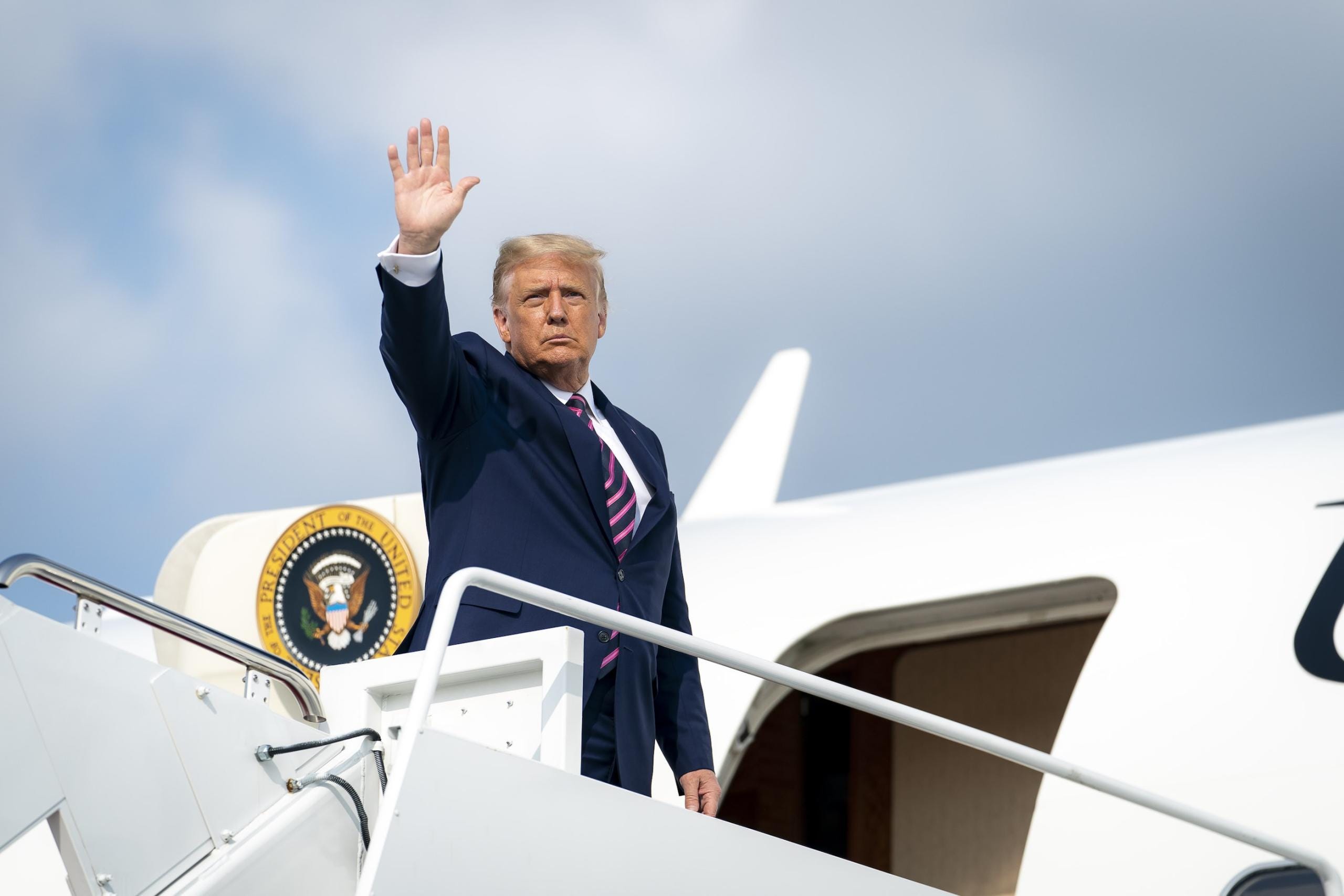
Photograph courtesy of Trump White House Archived. Published under a Creative Commons license.