
Brexit at Ten
The State of UK Media

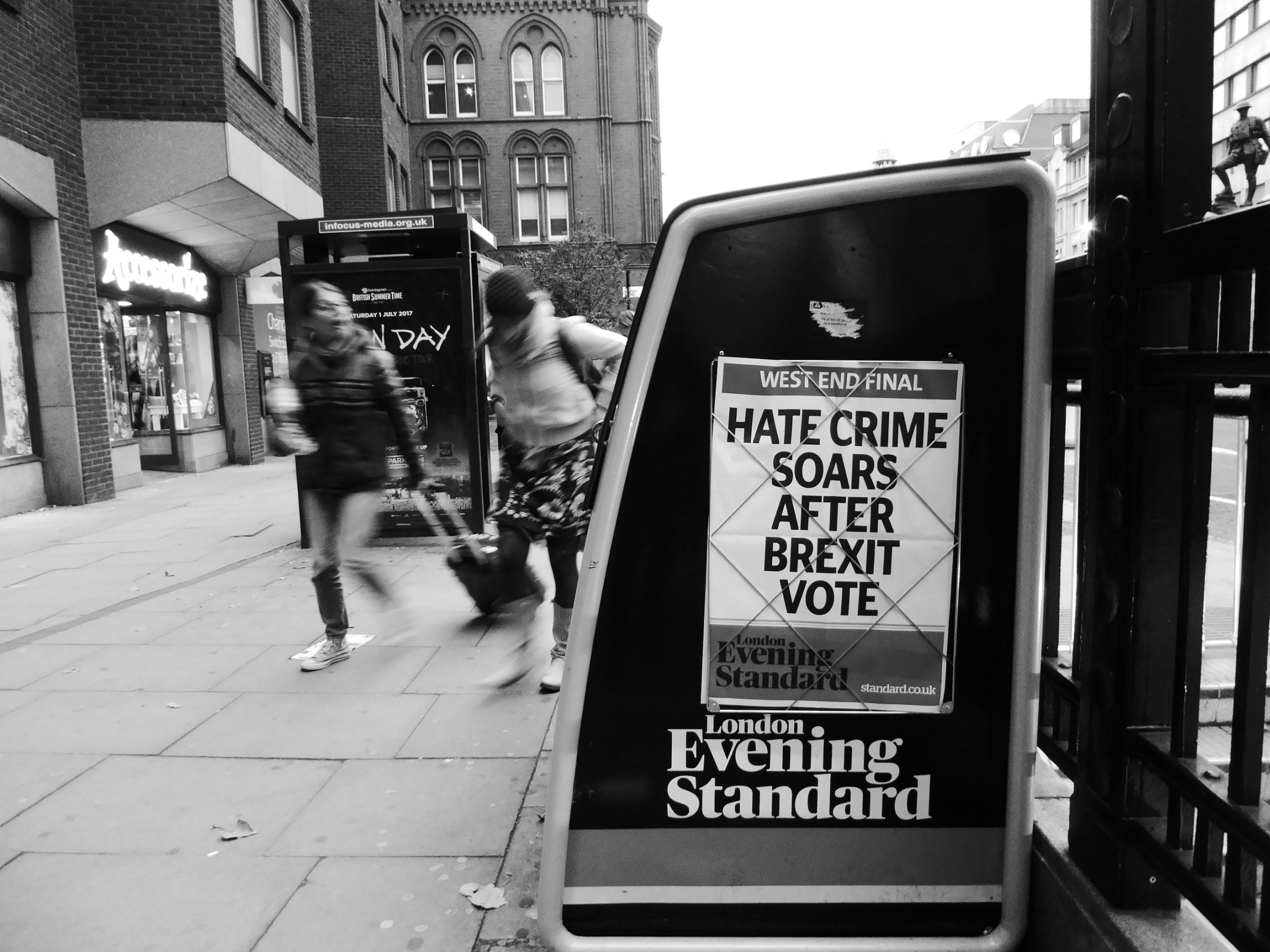
By Josh White
Although Brexit failed to achieve the stated goals of its supporters, the referendum dramatically transformed both the UK's political landscape and the media that cover it.
As its tenth anniversary approaches, we can expect a tidal wave of commemoration. But few people in the mainstream media will acknowledge Brexit’s true impact because doing so would require a self-reflexivity they are either unable or unwilling to summon.
Many of the same issues debated in 2016 continue to divide the country today.
Britain’s place in the world remains unsettled. Closing the borders and going after foreigners continues to be the raison d’être of the far right. The backlash against so-called woke ideology, encompassing feminism, trans rights and multiculturalism, has only intensified.
In other words, the idea that Brexit might be a way to blow off steam and restore the nation’s composure has been emphatically disproven.
So what did Brexit accomplish?
Few conservatives are willing to confront the fact that the UK’s exit from the European Union is what drove the surge in non-European immigration that they now rail against.
The new populist consensus in right-wing media is Faragism, but it doesn’t end with cheerleading Reform UK. In fact, Farage now looks downright moderate compared to his competition from the far right.
His Reform UK party is facing a challenge from Rupert Lowe’s breakaway faction, Restore Britain, which has made hardline demands for millions of people to be deported.
Instead of slaking Britons’ thirst for change, Brexit made it stronger. The result was an unquenchable yearning for a great purge, an ethnic cleansing, rather than trying to fix what is actually wrong with the country.
The failure of Brexit to produce national renewal hasn’t taught the nationalist right anything. Not only has the anti-migrant discourse worsened significantly, thanks to GB News and Talk, but the right has also managed to move the Overton Window from closing borders to deporting scores of people.
Neo-Nazi group Homeland has been distributing leaflets promoting the Great Replacement conspiracy theory, quoting headlines from mainstream papers like the Daily Express and Daily Mail, claiming white British people will be a minority in the UK by the 2050s.
It’s no coincidence that the idea of white extinction, the basic claim of the Great Replacement theory, is being mainstreamed. This is just as the same media have normalised the far right’s demands for mass deportations.
Crucially, this pivot to outright white supremacism has also been aided by the UK’s traditional conservative newspapers, The Telegraph and the Daily Express.
That’s because, rather than cementing the Tories’ hold over the right, as some Leave supporters hoped, Brexit undermined it.
The referendum’s most dramatic impact was on the UK’s major political parties.
Brexit was the catalyst for the spectacular implosion of the Conservative Party. Then the vacuum that opened up in its wake created the conditions necessary for the Labour Party to suffer a similar fate, as the recent local elections made abundantly clear.
The simplest reason for this break with the past is that Brexit did not deliver any of the improvements that the Leave proponents promised.
Brexit was supposed to unlock a new future of prosperity. Immigration would fall dramatically once national sovereignty was restored and British capitalism could finally reach its zenith.
So we were told. But we were deceived.
Brexit didn’t simply mark the UK’s political break with the European Union. It also destroyed the media consensus that there was a centre ground, leading to a new assertive nationalism and sending liberalism into retreat.
A new common sense has usurped centrism thanks to the counter-hegemony of national populism.
While this transformation has its origins in UK tabloid culture, even its traditional leaders have struggled to keep up with the pace of change. And legacy newspapers on the right have had to mimic them to stay relevant.
The British media industry shows no sign of stepping back from the culture wars, let alone attempting to close the deep divide in our society. Perhaps the crumbling social order can’t be repaired or propped up, but at least someone can profit from the carnage.
The country is more polarised than it was in 2016. And the state of the media reflects this.
The Brexit vote was one of those moments that forces everyone to take a side. A new generation of media players and organisations defined by this moment has emerged since the referendum kicked off years of chaos.
GB News and Talk have brought Fox News-style broadcasting to the UK with scores of shock jocks, including some politicians. Meanwhile, a new ecology of alternative media has emerged, showing that the right can be challenged.
Making proper sense of these developments requires a review of the past decade.
Waking up on 24th June, 2016, we entered a fever dream with Nigel Farage declaring “Independence Day!”
This was a huge shock to centrist broadcasters, but it’s easy to forget how much it shocked right-wing Eurosceptic newspapers too.
Even some of the big Leave campaigners were left shaken: Boris Johnson and Michael Gove looked physically ill at the press conference on Brexit Day. Both would return to their origins as hacks after being driven from power.
Gove is editor of The Spectator under CEO Freddie Sayers, the face of UnHerd, while Johnson writes a weekly column for the Daily Mail. Naturally, Boris is paid £1 million a year for typing up his thoughts.
The Brexit saga can be divided into at least two phases: the long, short crisis over Britain’s negotiated exit (2016-2019) and the post-EU settlement (2020-present). These two phases have spurred the emergence of new media and the rise of new press oligarchs.
The New European, later rebranded as The New World, was launched as a temporary paper for Remainers following the referendum. It’s still with us all these years later because it delivers for its liberal readership.
There was also UnHerd, founded in 2017 by Eurosceptic Tory operative Tim Montgomerie, backed by hedge fund manager Paul Marshall. The former Lib Dem-turned-Brexiteer later bought The Spectator after helping to start GB News.
By 2019, Byline Times had launched as a magazine for disaffected liberals and progressives who wanted to fight back against the tabloids’ rightward march. The Battleground itself is also part of this fightback, albeit from Brussels.
Brexit became a reality in January 2020. Broadcasters GB News and TalkTV (now known as Talk) made the first breakthroughs for the post-Brexit era, with both channels catering to a minority of viewers.
Some of this wave of change has involved new publications taking on old roles. Right-wing magazine Standpoint folded in 2019, but its place was taken by The Critic, backed by right-wing donor Jeremy Hosking.
At the same time, social media has changed dramatically in the decade since Brexit. X, formerly known as Twitter, has effectively become a platform for far-right networks where Muslims, Jews, women and LGBT+ people are regularly hosed with slime.
These elements were always present on Twitter during the Jack Dorsey era. Still, Elon Musk’s takeover has transformed the site into an echo chamber for far-right talking points, algorithmically amplifying the Great Replacement Theory.
There is a feedback loop between mainstream and alt-right media. The Podcast of the Lotus Eaters runs on derivative claims from the tabloid press and social media, while claiming that the news industry is dominated by “radical leftist traitors”.
Hope remains for the left, however. It has established a stronghold in alternative media and podcasting, just as the right has its own space.
Left-wing outfits such as Novara Media, PoliticsJOE and Declassified UK are part of a vibrant media counterculture drawing the attention of progressives away from the dead-tree press.
Meanwhile, the extreme centre has The Rest is Politics podcast and little else.
Brexit had a profound impact on the UK, though not in the way that the Eurosceptic right wanted. Getting Brexit done in 2019 didn’t reduce immigration or increase GDP growth.
The biggest danger now is that what remains of the centre will be reshaped by the nativist right. This could result in the BBC hosting the 2029 election debates on “mild” deportation policies versus mass deportations.
The battle now isn’t to exit Europe, but to return to a past Britain that never existed. Our job is to expose the dangers of acting on this fantasy.
Photograph courtesy of Duncan Cumming. Published under a Creative Commons license.