
Broken Bonds
No Other Choice, Directed by Park Chan-wook

By Charlie Bertsch
Acclaimed Korean director Park Chan-wook’s No Other Choice is a black comedy about a blacker tragedy.
The film’s protagonist, Man-su, discovers that the life he has worked so hard to achieve—a loving family, beautiful home, and a good job that pays for them—is in mortal danger.
When his wife, Miri, tears away the wrapping paper to reveal her birthday gift, a pair of stylish heels, she remarks that only a man who feels secure would give such a present.
Because the opening scene is filmed to suggest that things are too good to be true, viewers who know the conventions of narrative cinema will interpret her words as a warning.
More often than not, a statement like this foreshadows marital infidelity, the most common problem in family dramas.
In No Other Choice, however, the promise of marital turbulence turns out to be a clever distraction. While we wait for the wife to stray, as it seems she inevitably must, the film shows us the sudden collapse of a different sort of “marriage”.
As we soon learn, the relationship between the protagonist and his employer is like that of a traditional businessman and his stay-at-home spouse.
This dimension is implicit in Park Chan-wook’s source material, Donald E. Westlake’s 1997 novel The Axe. Like the book and 2005 Costa-Gavras film adaptation, No Other Choice relates the tale of a middle manager at a paper manufacturer who loses his job as a result of corporate “downsizing”. Instead of reciprocating his devotion, his firm brutally discards him.
All three texts concern their unemployed protagonist’s decision to improve his chances of getting rehired by literally eliminating the competition. In the process, they dramatise capitalism’s destruction of social bonds, which makes the Latin proverb Homo homini lupus est (“Man is a wolf to his fellow man”) a depressing reality.
But whereas The Axe concentrates on the reduction of the white-collar workforce made possible by computerisation at the end of the Cold War, No Other Choice directs our attention to the far more extensive disemployment heralded by the spread of artificial intelligence.
Westlake underscored the allegorical potential of his tale by focusing on the paper industry. As screens eliminated the need for traditional record-keeping and business correspondence, the middle managers who had supervised “paper pushing” became superfluous.
Park Chan-wook expands on this allegory, using the war on paper as an implicit commentary on the displacement of physical media and, with it, the loss of the human touch. In a digital economy dominated by numbers that never get printed out, what should matter most is deemed immaterial.
This sad fate is poignantly conveyed by the superb credit sequence at the end of the film, in which words appear on various handmade papers. The irregular texture of the paper conveys an authenticity inextricably bound to imperfection, much as the flawed mortal creatures it metonymically represents.
Although this is the primary message of No Other Choice, the film also doubles as a commentary on the contemporary geopolitical landscape.
Man-su loses his job when an American conglomerate acquires his firm. The values that have shaped his career, exemplified by a business version of filial piety, mean nothing to these outsiders.
The film’s title distils the American attitude, which is antithetical to traditional Korean ways. “No other choice” only makes sense when corporations focus exclusively on the bottom line. In other words, this phrase is a euphemism that justifies harm.
Within the film’s context, “no other choice” conveys the merciless practices of transnational corporations that no longer see a compelling reason to practice harm reduction. But the phrase could just as easily be applied to the way nations behave.
Donald Trump’s insistence on taking control of Greenland is a prime example. His administration has been arguing that the United States has “no other choice” in the matter, because otherwise Russia or China would take advantage of Denmark’s weakness. From Trump’s perspective, it doesn’t make sense to preserve a political order based on longstanding relationships if his goals can be achieved by breaking those bonds.
No Other Choice not only functions as an allegory for Post-Fordist capitalism, but also the political realignment to which it inevitably led. That’s what makes this Korean film so relevant for European audiences.
The relationship between South Korea and the United States has been deeply significant for Europe since the Korean War began.
During the Cold War, the obvious parallels between divided Germany and divided Korea reciprocally illuminated the American role as a domineering partner and self-interested protector. While the United States still maintained a large military presence in the Bundesrepublik, the cross-cultural tensions that its soldiers created were a problem for both nations.
While No Other Choice may not be consciously intended as a commentary on the relationship between the United States and its strategic dependents, its tale of infidelity resonates powerfully.
From this perspective, Man-su’s deranged quest to murder his way back into a job doubles as a cautionary tale about what is likely to happen if the Trump Administration follows through on his threat to betray American allies.
If the United States ceases to treat European governments as valued partners in a collaborative enterprise, the tensions already threatening to tear the EU apart might become too severe to contain. As a consequence, its member states would be tempted to go it alone, like the protagonist in No Other Choice, rather than trying to find a new way of working together.
There are already indications that Italy’s Giorgia Meloni has a mind to make like Man-su. And other authoritarian populists may follow her ‘postfascist’ lead.
That’s why No Other Choice not only serves as a warning about what will happen if corporations pursue technological advancement at the expense of workers, but how that willingness to break social bonds might translate to the relationship between the world’s superpowers and the nations that are dependent on their support.
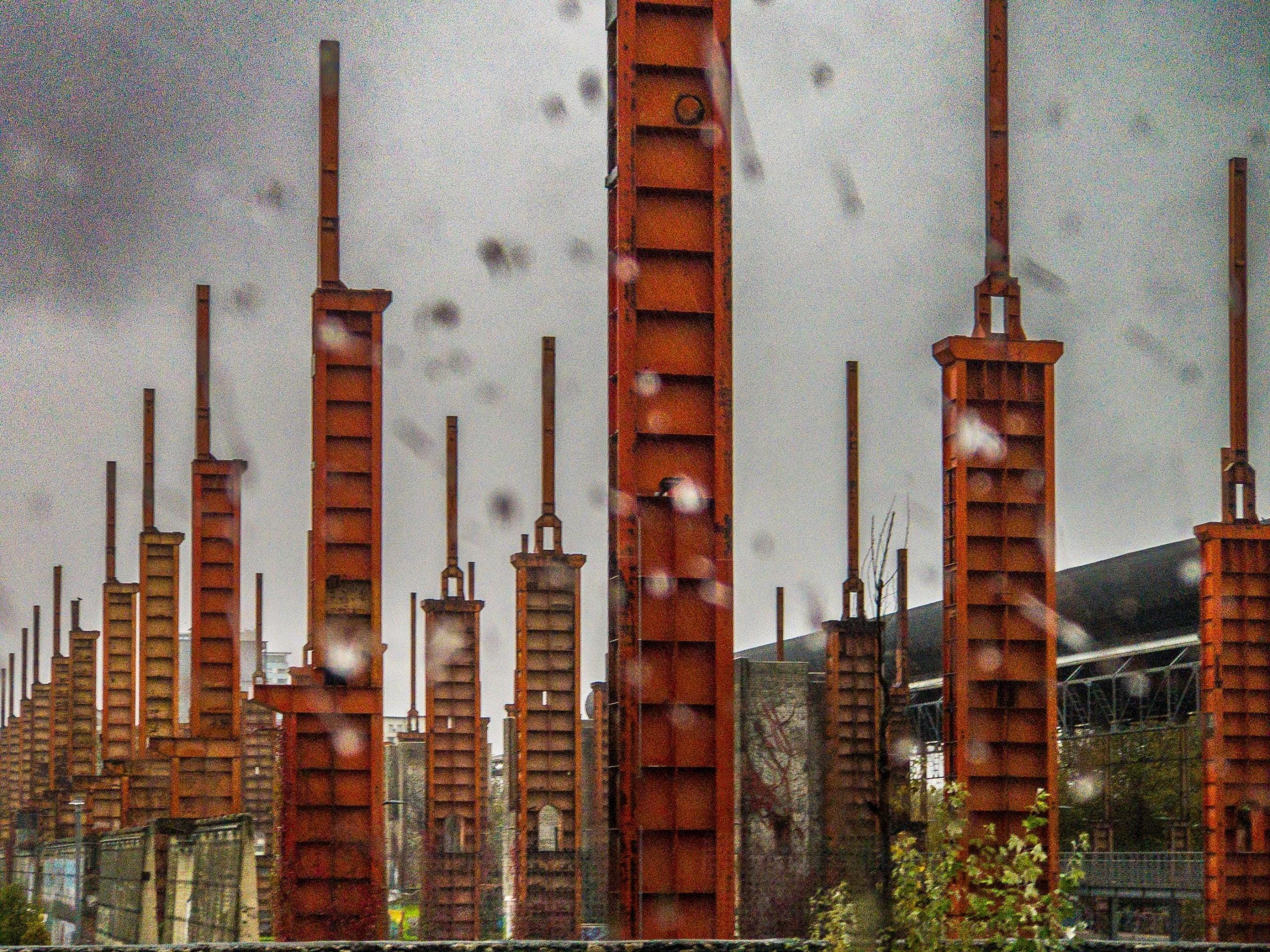
Photograph courtesy of Joel Schalit. All rights reserved.