
Death From Above
The Meaning of Airstrikes

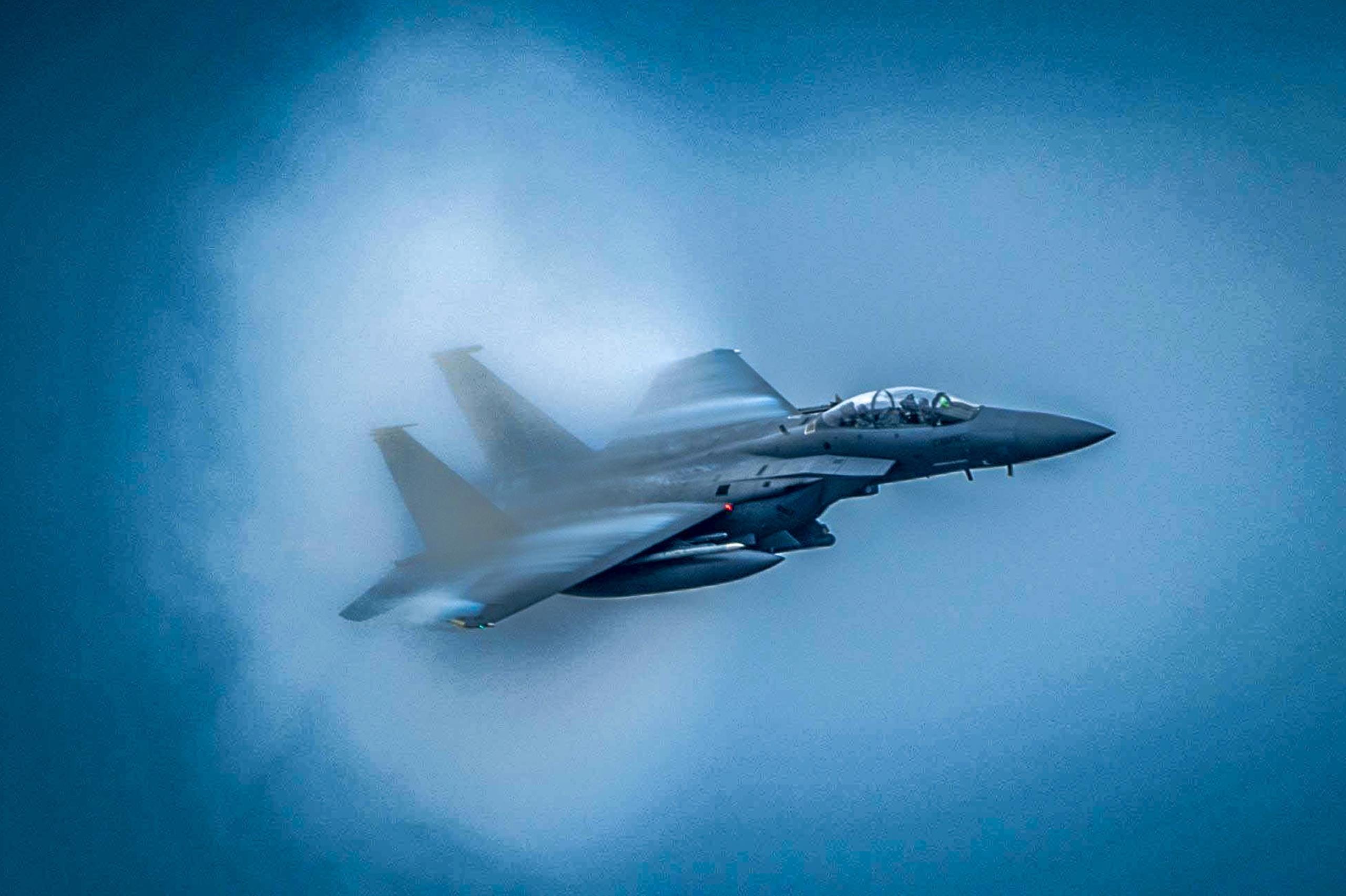
By Nathan Akehurst
In Imperial Policing, Sir Charles Gwynn’s bluntly-named 1934 treatise, the British general outlines a theory of airpower as a tool for the “restoration of order” among colonised people.
Gwynn (also known for helping draw the disputed Ethiopian-Sudanese border, over which Sudan has just accused Ethiopia of launching drones into its civil war) was among many colonial enforcers smitten with the then-novel potential of airstrikes as inexorable instruments of imperial policy.
Amidst post-WWI disarmament, the nascent Royal Air Force was expanded, terrorising rebels into submission in Afghanistan, India, and Somaliland. This may not have saved the empire, but the primacy of airpower is echoed today by US Secretary of War Pete Hegseth, who boasts of having “complete control of Iranian skies…every minute of every day until we decide it’s over”.
The nascent British Royal Air Force (RAF) flew some of its first missions in Iran, against early Soviets and their Persian sympathisers. British aircraft quarterbacked the coup that put the first Shah, Reza Pahlavi, on the throne.
In Qazvin, near Tehran, flew a section of one of the RAF squadrons which put down a concurrent rebellion in neighbouring Iraq, during which Winston Churchill backed the idea of chemical weapons being deployed from the air against “recalcitrant Arabs”.
As the world shifted from coal to oil, and Britain’s energy independence declined, the Persian Gulf began to assume the geostrategic weight it carries today. When Iran’s first and only democratic government demanded a slightly greater share of the profit from its own oilfields, London and Washington conspired to overthrow it in a violent 1953 coup.
Airborne units from the Parachute Regiment, Britain’s elite colonial counterinsurgency unit, stood on standby to assist. They were never needed.
Iranian democracy was replaced with a monarchical autocracy under a new Shah, which lasted 26 years before the 1979 revolution, giving way to today’s clerical autocracy. The colonial-era Anglo-Iranian Oil Company became BP, whose global oil interests, even in the era of climate breakdown, remain protected by the British state and military.
America’s illegal bombing campaign against Iran is the newest iteration of imperial airpower in the region. In early 2026, protests exploded across the country, spurred in part by political repression and by economic shortages in which US sanctions have played an intentionally immiserating role.
Even before Tehran’s brutal clampdown on protesters, there was never a chance that the political process would be allowed to run its course. For those watching the plateau from above, Iran’s turmoil was an opportunity for potential control of a crucial artery in the global market.
In addition to the country’s oil riches, the sinews of world trade rest on the labour of a relatively small number of often heavily-exploited seafarers. Around a fifth of that trade sails through, past the Iranian seaboard in the now-closed Strait of Hormuz.
It is control, not ideology, that consistently determines Washington’s attitude to the region. Saddam Hussein’s 1981 invasion of Iran was granted access to elements of the United States’ new airborne panopticon, benefiting from satellite imagery and missile technology as he indiscriminately bombed Iran’s cities.
In an infamous 1988 incident, an American ship-launched missile blew an Iranian airliner out of the sky, for which no apology was forthcoming. But the status of Washington’s proxy is rarely a stable one, and the machine was turned on Saddam Hussein’s Iraq not long after.
The First Gulf War was a curtain-raiser on the new American century, defined again by airpower. As the US annihilated Iraq’s military, it took every opportunity to show off its airborne capabilities, revelling in images of the charred remains of Iraqi forces obliterated from above as they fled down the “Highway of Death.”
The US also began to talk about its new precision-strike capabilities, adding a new dimension to the mythology of imperial power. The exercise of total surveillance and control was also made moral, a “clean” form of war which could neatly separate deserving and undeserving targets.
This canard has always been meant to mislead. Israel clung to it even as its aircrews unleashed 2000-pound unguided bombs over Gaza’s hospitals in 2024. Such myths led philosopher Jean Baudrillard to say the Gulf War did not exist, provocatively highlighting the alternate reality of the war presented to American audiences.
An inverted, hijacked form of airpower killed thousands and traumatised American politics in September 2001, and once again, it was aerial bombing in the Middle East that defined the US response.
This process even briefly brought Iran into the fold, with Quds Force commander Qasem Soleimani helping pick targets for US airstrikes in the early days of the Afghanistan war. But Iraq and Afghanistan moved from easy opening airstrikes to attritional nightmares on the ground, a legacy of failure that would help Donald Trump win office twice on an anti-war platform, before proceeding to bomb half a dozen countries in three months.
The Trump Administration is keen to reassure Americans that there will be no return to Bush-era quagmires. It’s why Hegseth denounced the Iraq war as woke. What he means is that this time there will be no attempts at reconstruction or democracy promotion, and no high-minded rhetoric about building schools for girls (their schools will simply be bombed instead).
Domestically, the White House soothes its base with AI-generated Americana; internationally, it offers them a return to a simpler, happier form of war, a theory of airpower where American bombs can order the world at low cost with high reward.
“Our control of the skies [is] increasing with every wave of airpower”, boasted Hegseth, “[and] the hunt will only get more precise, powerful, and lethal.” And later, “it’s not a fair fight…we are punching them when they’re down”.
For some time, the naysayers, with their warnings of long-term blowback, mission creep, or unintended consequences arising from open defiance of international norms, could be ignored. Naked aggression was working.
The 2020 assassination of Qassem Soleimani by a MQ-9 Reaper drone did not trigger a significant Iranian response. The 2026 airborne kidnapping of Nicolas Maduro was swift and operationally successful, opening Venezuela up to oil extraction post-haste. Even the twelve-day war last year between the US, Israel, and Iran was no grand inflexion point.
I wouldn’t have said that at the time, whilst staying in a hotel in Beirut watching missile trails in the night sky, but globally, news cycles and markets were marching on relatively unscathed.
This was true if you took a zoomed-out aerial view; but at closer range, everything had changed. The US had gone from the guarantor (at least in name) of a predictable world order to the premier advocate of a world where everyone does as they wish.
More powers concluded that there were few costs to relitigating their historic grievances by the sword; Russia in the Donbas, Azerbaijan in Nagorno-Karabakh, Israel in Gaza.
We may live in an era of “weaponised interdependence” where supremacy is won through control over nodes of complex connected global systems. But firepower has become a more critical node in that network, with global arms spending reaching record highs as states seek to exert their will against crisis and uncertainty.
In short, we are now perched on a powder keg. This is what makes the Trump Administration’s cavalier approach so striking, and not merely at the operational level. The war polls poorly in the US, and the government has made no attempt to produce popular consent for it.
“Operation Epic Fury”, a name that could be lifted from a 2000s PlayStation franchise, has been marked more by crude online machismo than operational reasoning. If troops died, the president said, c’est la vie. The White House and European governments are obsessed with domestic migration control, but happy to trigger a potentially seismic refugee emergency.
Economic chain reactions are impossible to predict. The US may have set out to create an image of an easy win, a quick killing imposed from above, a deus ex machina. But it has done the opposite.
If Washington sought to swiftly amputate Iranian offensive capabilities and leave, it has already failed. If it seeks to achieve regime change through hoping airstrikes will trigger spontaneous uprisings, it has ignored the manifold literature (including a notable recent warning from airpower coercion expert Robert Pape) that such strategies have never worked throughout history.
A more disturbing possibility is that the Trump Administration has looked at the worst-case scenarios, the warlordism and state failure that marked Libya and Syria’s twenty-first centuries, and decided that this outcome is their war aim in Iran. Even in that scenario, they should be careful what they are wishing for.
It’s hard to avoid the conclusion of Iranian historian Ervand Abrahamian that Washington’s perceived interests are unfathomable and decisions are being made without rhyme or reason. Its purge of military brass probably hasn’t helped. America’s control of the skies conceals its lack of control of anything else.
Airpower has changed. The first generation of unmanned aircraft was expensive, powerful drones, the preserve of countries with advanced manufacturing capacity and money to burn. They were the ultimate imperial policing tool, the assassins’ knives of a global programme of extrajudicial assassination.
This remains the image the industry presents. Billboards adorning this year’s Munich Security Conference proclaimed that the “future is unmanned”, captioning chiaroscuro images of sleek, futuristic aircraft. The AI revolution is central to all this, as illustrated by the Trump Administration’s attacks on Anthropic over the company’s attempts to place limits around military and surveillance use of its LLM as the war began.
The military tech industry promises an ultimate “clean”, Baudrillardian form of warfare where the flying, shooting and even the selection of targets is automated. The dying, of course, still gets done by human civilians. It appears possible that the massacre at the Iranian girls’ school was the result of target selection by Anthropic’s Claude.
In the years since Charles Gwynn, and even since the United States’ 1997 articulation of “full spectrum dominance”, airpower has also been partially democratised. The airborne future belongs more to the Ukrainian IT support worker I met on a train from Lviv to Budapest, who manufactures cheap drone parts for her country’s military in her back garden.
The Sudan war has run on cheap, low-quality drones with Starlink connections bolted on. The AK-47s of the 21st century - unlike guns, drones do not require humans to be recruited, fed, inspired, and trained.
Iran’s low-end loitering munitions are at the centre of its strategy for handling asymmetry; the US has followed suit and launched its own version.
Drone warfare is not the swift, futuristic form we were sold. Instead, cheap strike power and decentralised manufacturing produce battlefields where unmolested movement is next to impossible. The bloodsucking, attritional, drone-filled fronts of Eastern Ukraine would be readily recognised by veterans of the Ypres salient.
Even in Iran, where there is not (yet) fighting on the ground, these attritional dynamics are present. After the 2025 twelve-day war, the Iranians, with fewer global concerns than the US, replenished offensive stocks beyond the capacity of the Americans to supply sufficient interceptors to their own forces, Israel, Ukraine, and their Gulf allies. High-end interceptor munitions are slow to build and quick to burn through.
This rising asymmetry (alongside the conviction that Iran’s prior relative restraint was a sign of weakness and that protests had bruised state coherence) probably triggered the US decision to strike when they did. Israel too saw an opportunity, its autumn drawdown from inflicting hundreds to tens of deaths a day in Gaza having provided it headroom to replenish.
Despite their recent clamour about strategic independence from Washington and defending their “values”, European Union member states (with the notable exception of Spain) piled in. But the question remained: to what end, not just politically but also operationally.
Airpower as imperial policing breaks down when surgical strikes fail to deal a death blow. Faced with obstinate realities on the ground, and absent the complexities of ground war, states’ intuitive choice is escalation.
Within the first few days of the war, the death toll in Iran had climbed over a thousand, thousands of targets had been hit, and a regional conflagration was spiralling. In response, the US and Israel turned up the heat.
Repeating the Israeli playbook in Gaza, they argued that alleged Iranian military activity in city centres granted them the right to bomb civilians at will. They hit hospitals and TV stations. They hit a desalination plant, threatening drinking water. They hit fuel storage depots in Tehran, leaving apocalyptic scenes of blazing oil fires across populated areas in their wake. They hit the Golestan palace, a Unesco-listed heritage site and the seat of Persian royalty for centuries.
What first appeared to be a decapitation campaign of the Iranian leadership has become a mindless, monstrous airborne beating with no clear end.
Iran’s counterattacks, meanwhile, persisted. They persisted despite the United States’ effective suppression of Iranian air defence. So far, ally Kuwait has downed more US jets than Tehran.
Regardless of whether and how long the Iranian state holds, this new form of conflict has already stabbed into the heartlands of global capitalism.
The sanctity of the UAE, a tax-free, responsibility-free, politics-free haven for the world’s wealthy expatriates, lies shattered by the reality of weapons debris raining onto the balconies of luxury hotels. The region is a desultory, screeching mess of missiles flying everywhere.
Both sides of the Emirati/Saudi schism have been hit, as have Qatar, Kuwait and Cyprus. Israel has launched a new attempt to annex Lebanon as its missiles rain on Beirut, leaving hundreds dead and tens of thousands of refugees sleeping on the coast.
Gwynnian imperial policing, like everything else once certain about the old order, has faded, replaced by airpower as a catalyst and accelerant of stochastic violence and chaos.
The airstrike functions as an ideological weapon; an imperial blend of distant, detached control over life and intense rage. The bomber fleets that destroyed Vietnam, the pacification squadrons sent to the edges of the creaking British empire, and the missile batteries spread across West Asia are not unavoidable consequences of military aviation’s evolution.
Airstrikes are manifestations of a doctrine of domination, shaped by great powers balancing a contradiction between their own absolute authority and their fear of unpredictable events closer to the ground. The vast, empty sky is their zone of control.
As a crisis-riven world becomes less amenable to coercion, powerful states’ temptation to airstrike events back into predictability will persist. Those of us on the ground, faced with the consequences of such actions, will be left to restrain them.
Photograph courtesy of US Air Force. Published under a Creative Commons license.