
Democracy Denied
How the World Leaves Palestine Behind

By Mitchell Plitnick
Our worst fears about the Gaza ceasefire have come true.
Trump’s $17 billion “reconstruction fund” was always a lie. It never happened. And Netanyahu has ordered the IDF to occupy 70% of the strip.
As diplomats and pundits wring their hands amid the collapse of yet another Gaza peace plan, they ignore the contradiction embedded in every proposed solution to the Israeli–Palestinian conflict: no one is willing to recognise the Palestinians’ basic right to self-determination.
The United States, the European Union, and Arab states all profess support for peace. Yet even their nominal endorsement of a two-state solution avoids meaningful recognition of Palestinian self-determination.
Today’s refusal to conceive of Palestinian self-rule in Gaza is not new, nor is it a product of the 7 October 2023 attack or Israel’s genocide in its aftermath.
In 2006, the second and, to date, last national legislative election was held in the occupied Palestinian territories.
Numerous parties ran. But the West’s preferred Fatah party, which controlled the Palestinian legislature before the election, fielded multiple candidates in many districts.
Fatah candidates thus split their votes, leading to the victory of the Change and Reform List, which was the name under which Hamas ran.
The outcome was a shock to many around the world.
People familiar with Palestinian politics at the time blamed Fatah’s clumsy campaign and organisation as well as widespread dissatisfaction with Fatah’s cronyism and corruption for Hamas’ victory.
Indeed, polls after the election showed strong support for a two-state solution and for Hamas changing its policies to recognise “Israel’s right to exist.”
In The Hundred Years War on Palestine: A History of Settler Colonialism and Resistance 1917-2017, Rashid Khalidi wrote that the Palestinians felt Fatah was “corrupt and unresponsive to popular demands”, and voted accordingly.
But this didn’t matter to the West. The Quartet (comprising the US, the EU, the United Nations, and the Russian Federation) quickly sanctioned the new Palestinian government.
Washington demanded that the Palestinian Authority repay aid money and cut off all other support and communication.
The Quartet issued three demands of Hamas: recognition of Israel, acceptance of past agreements, and renunciation of armed resistance.
Crucially, these demands were not made of the Palestinian Authority, which had already conceded on these points. Instead, they were directed at Hamas, the political party.
This was unprecedented.
In normal international relations, when a new party takes power, the government is expected to continue to abide by its agreements. But there is no expectation that the newly elected party will change its position on those deals.
If such a standard were applied to Israel, for example, the official rejection of a two-state solution by the Likud would have disqualified Israel from receiving American aid once that party came back into power.
The US would soon go further, almost immediately plotting to destabilise the new Palestinian government. Ultimately, in 2007, the Bush Administration conspired with Fatah and Israel to launch a coup against Hamas.
This attempt failed, but fractured the Palestinian body politic, creating the split between Hamas rule in Gaza and Fatah in the West Bank that Israel has been reinforcing and exploiting ever since to keep the Palestinians powerless to resist the occupation.
Some have argued that “elections have consequences” and, since the Palestinians elected Hamas in 2006, they brought the world’s response on themselves. This thinking is, of course, fallacious.
Applying this reasoning to the United States, whose voters have repeatedly elected presidents and congressional majorities that supported imperial policies, military interventions, and some of the world’s most brutal dictatorships, would lead inexorably to the conclusion that terrorist attacks such as those of 11 September 2001 were justified.
Few people would subscribe to such thinking. Yet many seem to apply it to Palestinians.
Ironically, one reason Hamas’ victory came about was that US President George W. Bush pressed for it, even as it became apparent that Fatah’s victory was not certain.
Bush did so, in part, because the neoconservative ideology that had gotten the United States mired so thoroughly in the quagmire of Iraq dictated that elections must move forward.
The story in Gaza today is vastly different from 2006.
Beyond the situation on the ground, US President Donald Trump appears to have personal ambitions tied to Gaza, including the possibility of profiting from its redevelopment into a tourist hub with few Palestinians remaining and establishing his envisioned “Board of Peace”, a global centre of influence under long-term family control.
Yet the same denial of the basic Palestinian right of self-determination remains.
In 2006, the two-state solution was the way most Palestinians expressed their national aspirations. Today, there is a great deal more diversity of opinion among Palestinians about what self-determination looks like, although the most recent polls suggest the two-state idea is making something of a comeback.
But future solutions are so far from the current reality that it is hard to even consider them amid the ongoing, genocidal devastation of Gaza. Yet the denial of Palestinians’ right to have any say, let alone the final say, persists.
The structure of Trump’s governing Board of Peace speaks to this refusal.
Palestinians are not represented in any of the decision-making bodies. They only appear in the technocratic committee that is supposed to handle the day-to-day civil society administration of Gaza. Even that body has been barred from entering Gaza, let alone doing any work inside of it.
The hindrance, it is said, is Hamas’ refusal to disarm.
Although Hamas has repeatedly proposed disarmament under reasonable conditions, it is being asked to disarm first—effectively exposing it to Israeli forces and the various Palestinian gangs and bandits, several of whom operate with Israeli support and all of whom have been previously confronted by Hamas in efforts to uphold law and order.
Disregard for Palestinian rights is even more evident in the fact that all the plans, “confidence-building measures”, and other gestures explicitly exclude any role for Palestinians in running their own government in Gaza.
This is not merely the product of Israel’s ambitions to expand its borders. There is no support for even partial Palestinian self-rule or limited autonomy from the EU, the US and Arab states.
Some might argue that the recent recognition of the State of Palestine by EU member states and the United Kingdom constitutes such support.
They might make a similar argument about Saudi Arabia’s insistence that it will not entertain normalising relations with Israel without what it calls “an irreversible path” to a Palestinian state.
This is political theatre with little meaning for Palestinians suffering in Gaza right now.
The idea of a Palestinian state, whether in terms of diplomatic recognition or an imaginary irreversible path to one, is an attempt to evade the political necessities of the moment.
Where are the calls for elections? They are absent because they might not turn out the way Western powers want.
Where are the critiques of the lack of Palestinian involvement of any kind in the running of Gaza’s affairs?
Imagine if we only held elections in Israel if we could guarantee that Likud would not win, or if we tried to bar Republicans in the United States, or the AfD from running in Germany.
There would be justified outrage.
Or imagine if the world had insisted in 1948 that it would not recognise Israel if future Prime Minister Menachem Begin, who remained a wanted fugitive on charges of terrorism by the British government until 1953, had run for the Knesset?
There is simply no consistent moral line that permits these restrictions on Palestinians’ right to choose their own leadership.
Israeli and Western fears that they won’t choose the leaders we want are an intolerable double standard and, in themselves, a hypocritical stain on our own pretensions to democracy.
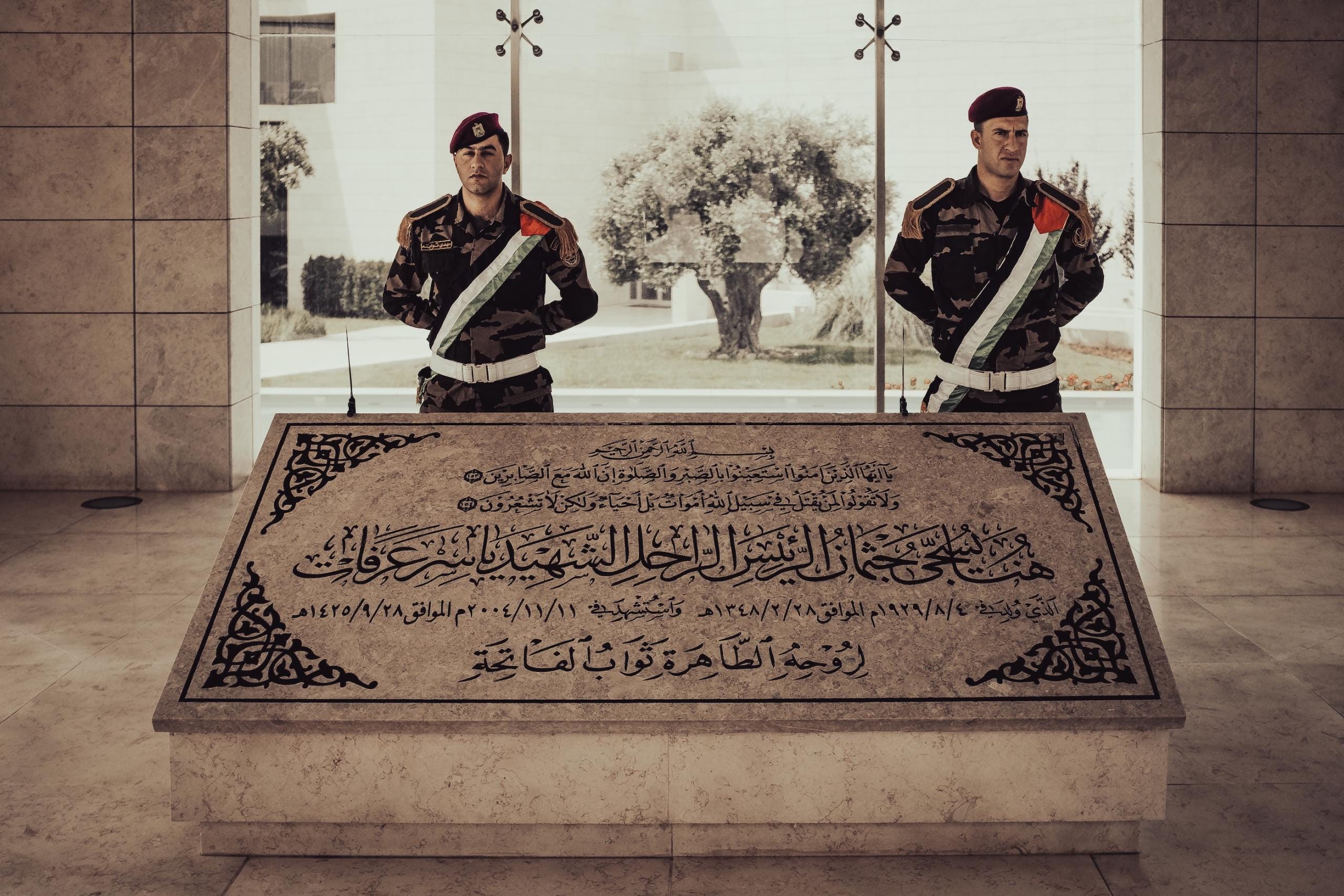
Photograph courtesy of Joel Schalit. All rights reserved.