
Demystifying the Levant
Middle East Eye's Alternative Journalism

By Josh White
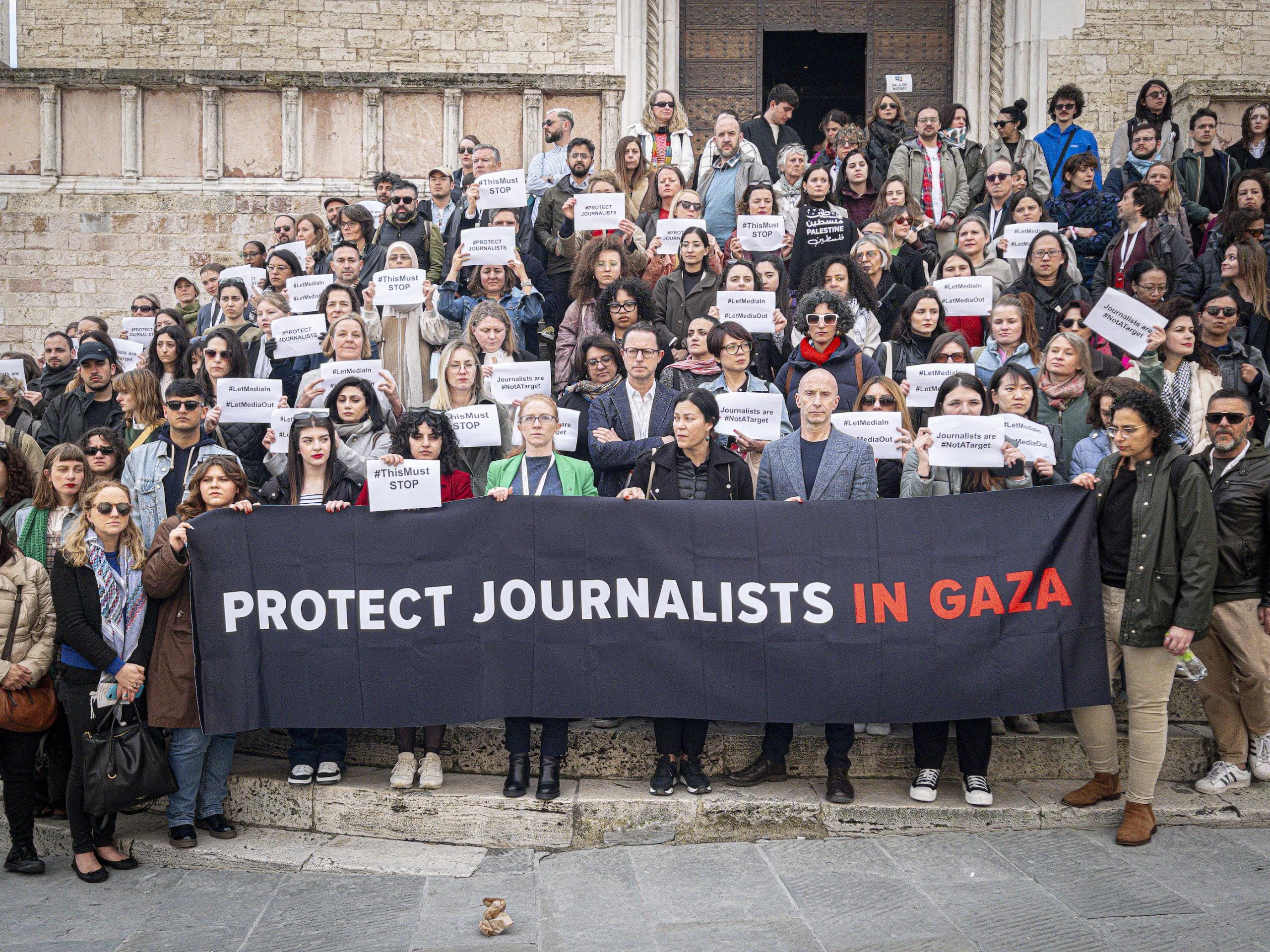
The August 2025 killing of two prominent Palestinian journalists in Gaza drew international attention to the British platform they were working for, Middle East Eye.
Ahmed Abu Aziz and Mohammed Salama had unflinchingly documented the horrors of the Gaza war through video, photography and news writing for international media. Middle East Eye was among the small number of English-language publications to take their articles.
The two men died, alongside three other journalists, in a “double tap” strike on Nasser hospital in Khan Younis that killed an estimated 20 people and injured 50 more.
This was no isolated incident. According to the Committee to Protect Journalists, the Israeli military has killed over 250 reporters in Gaza since the start of the current war in October 2023. It continues to assassinate them, despite a so-called “ceasefire”.
The Israeli government has banned international journalists from entering Gaza throughout the conflict, forcing correspondents to report from outside the territory. When it does allow Western press in, its preference is for heavily stage-managed tours, such as when far-right UK commentator Douglas Murray was embedded with Israeli troops.
Unlike Murray, who spent plenty of time in Israel, Abu Aziz and Salama worked in Gaza independently of the IDF and paid the ultimate price for their freelance reporting.
Middle East Eye deserves tremendous credit for consistently platforming Palestinians, whether they are campaigners, journalists or politicians. It’s particularly important to reflect on the publication’s role now that the suffering of Palestinians is increasingly being sidelined in the news cycle.
Outside the Echo Chamber
Over the last dozen years, Middle East Eye has built itself into a minor powerhouse of alternative journalism. Editor-in-Chief David Hearst, former foreign lead writer at The Guardian, has led the publication since its launch in April 2014.
The news brand was established in London with Jamal Bessasso as director of MEE Limited. Bessasso is a Palestinian-Dutch media executive with prior positions at Al Jazeera and Samalink TV, which previously broadcast the pro-Hamas Al-Quds TV.
Unsurprisingly, Middle East Eye’s newsroom is unapologetic in its sympathy for Palestinians. Because that political slant is so anathema to traditional media, the publication can exert outsized influence, offering an otherwise marginalised perspective.
Unlike the BBC, Middle East Eye isn’t afraid to call the nightmarish scenes in Gaza a genocide. Although this assessment aligns with reports from human rights groups such as Amnesty International and B’Tselem, it is rarely voiced in mainstream discourse.
Many British newspapers have framed Gaza in culture war terms rather than taking the crisis seriously. War coverage has been just another points-scoring game for the likes of The Daily Telegraph.
To be sure, the number of pundits willing to defend Israel’s actions has dwindled over the last two years. Many commentators prefer to avoid the topic when they can, which is why Trump’s so-called “ceasefire” has been wrongly treated as a peace plan.
Middle East Eye sits outside this echo chamber. Its newsroom comprises good reporters and well-established dissident pundits, with an open door to establishment critics such as Peter Oborne.
Hearst has overseen the news company’s development into a formidable multimedia publication offering podcasts and videos. Middle East Eye likely reaches far more people through its range of audiovisual content than through its written content alone.
The platform features leading Middle Eastern experts, such as the anti-Zionist Israeli historian Avi Shlaim, who are rarely heard in mainstream broadcast news.
By contrast, the BBC and national newspapers in the UK want to keep the terms of mainstream discourse on Gaza as narrow as possible.
While a cretin might ask if Middle East Eye has covered other terrible conflicts as seriously as the Gaza War, a cursory glance at the publication provides insight into the Sudanese conflict and the war in Yemen.
Anyone accusing Middle East Eye of being a principally anti-Israel outlet should take a long look at it. Middle East Eye provides highly critical coverage of Arab governments across the region and is consequently banned in many Arab countries.
This includes coverage of Morocco’s occupation of Western Sahara, which most Western media continue to ignore. Just as in Middle East Eye’s coverage of Israel, it does not hesitate to take sides here, consistently stressing that Western Sahara is the last colony in Africa.
Middle East Eye has also run sympathetic coverage of the Iran protests, striking a balance between criticism of the Islamic regime’s violent crackdown on dissidents and expressing opposition to foreign intervention.
The publication has emphasised the role of Israeli interference in Iran, which has been covered by the Israeli press. Lately, it has focused attention on the threat of US military strikes against the Islamic Republic.
Perhaps in an earlier era, Middle East Eye would have advocated more forcefully for democratic change in Iran. The platform belongs to the post-Arab Spring era of pessimism about the prospects for revolutionary change in the region.
This shouldn’t be surprising. Middle East Eye has spent over a decade covering the travails of post-Arab Spring Egypt, Libya, Syria and Tunisia. Many of its best contributors still hanker for the hopeful moments of 2011.
In a 2021 op-ed, Hearst argued that the Arab Spring struggles are not over. The region needs democracy more than ever, not least because its crises have been exacerbated by tyranny.
Middle East Eye doesn’t just stand outside this story. It has been drawn into regional politics because it provides a platform for Arab critics of the authorities.
The Qatar Question
Much like Al Jazeera, Middle East Eye has been accused of adopting Qatar’s lines. However, David Hearst has argued Qatar should remain outside the Abraham Accords and pointed out that the Israeli strike on Doha demonstrates that the accords are not the route to peace.
It suits critics to dismiss Middle East Eye as a mere mouthpiece of Doha. Yet the notion that it is merely a government propaganda tool – akin to Russia’s RT and Iran’s Press TV – has no basis in reality.
Although Middle East Eye has infinitely higher reporting standards and clear news values than a state press bureau, the platform is routinely accused by critics of siding with Qatar’s proxies in the region.
Not many news organisations have been the subject of a diplomatic furore. Saudi Arabia and its Gulf allies tried to isolate Qatar for its role in promoting the Muslim Brotherhood across the wider region.
Saudi Arabia issued 13 demands to the Gulf monarchy, instructing Doha to close Al Jazeera and Middle East Eye. Emir Tamim bin Hamad Al-Thani disregarded them.
Of course, there are many reasons why Saudi Arabia would want them shuttered. The latter published Saudi writer Jamal Khashoggi, who became increasingly critical of Crown Prince Mohammed bin Salman.
Khashoggi was writing for Middle East Eye about the need for a rapprochement with Iran when Saudi agents murdered him in October 2018.
The Qatar diplomatic crisis lasted from 2017 to 2021; however, the complex dynamics among the petro-states remain unresolved. Saudi Arabia is now at odds with the United Arab Emirates, while Qatar continues to serve as a regional power broker.
Meanwhile, Middle East Eye has repeatedly denied being “controlled” by Qatar. The publication has criticised Qatar’s record on labour rights, particularly in the run-up to the 2022 FIFA World Cup.
Equally, Middle East Eye’s critical reporting on Israel is itself at odds with Qatar’s contorted regional strategy. The Gulf emirate has long supported Hamas and worked closely with Israel as an intermediary with the Palestinian organisation.
It is undoubtedly true that Al Jazeera, established by the Al-Thani royal family, is aligned with Qatar. But the situation is less clear with Middle East Eye. While there are rumours that Middle East Eye takes funding from Qatar, they have not been independently verified.
That arm ’s-length arrangement with Al Jazeera has been crucial for building the brand into a credible and trusted news source. Thus, the suggestion that Qatar’s influence would be innately malign is questionable.
It’s crucial to remember that corporate ownership, state power, financial pressures and internal political machinations compromise most Western media coverage.
This was true for the older generation of press barons such as Rupert Murdoch and Robert Maxwell, and remains true for figures like Amazon’s Jeff Bezos, whose initially hands-off approach to The Washington Post eventually gave way to direct intervention in its daily operations.
Regardless of its sources of support, Middle East Eye gives its subjects a much fairer hearing than most national newspapers in the UK.
There really are very few options for quality reporting on the Middle East. If you want to learn about Middle East politics, you could do far worse than clicking on a video produced by Middle East Eye.
Photograph courtesy of Joel Schalit. All rights reserved.