
Peace Through War
Israeli Illusions About Iran

By Mitchell Plitnick
In every war, persuading people is necessary.
In the Iran conflict, the most surprising effort is to convince the Israeli public that a more welcoming Middle East awaits them.
Just read the Israeli press.
At a Council on Foreign Relations event in New York, Haaretz reported, United Arab Emirates (UAE) presidential advisor Dr Anwar Gargash said:
“While ideologically, some people have preconceived notions of what Israel represents, the reality right now for many of the planners, I think, is going to be different.”
Gargash argued that the Gulf Arab states will grow closer to Israel, even hinting at more regional alliances, after the Iran war.
Both Israeli Prime Minister Benjamin Netanyahu and Foreign Minister Gideon Sa’ar have also expressed optimism about such an outcome.
“I think the Iranian folly of targeting the region is not in any way diminishing American rule. I think it’s strengthening America,” Gargash stated. By extension, he is speaking of a relative anger at Iran compared to Israel.
In the Times of Israel, Jacob Magid focused on the rumour that, having failed to prevent Donald Trump from going to war, Gulf states are now pressing him to push on until Iran’s defences are degraded enough to prevent similar attacks in the future.
The absence of context in both Gargash’s statements and Magid’s analysis is likely to mislead Israelis and the pro-Israel support network. They both focus on Gulf anger towards Iran, rather than explaining the broader strategic worries these states hold.
At the moment, Arab anger at Iran is raging. Despite how that shades what many see, the long-range strategy dictates moving away from both the US and Israel, not closer.
Gargash is expressing a very Emirati view. But the UAE is an outlier among the six Gulf Cooperation Council (GCC) countries.
Like Bahrain, it has normalised its relations with Israel and purchases Israeli arms. Unlike Bahrain, the UAE has also emerged as a more influential regional power, expanding its reach to Libya, Sudan, and Yemen.
The UAE is a very wealthy country, but it has a small citizen population. Although it has about 11.5 million residents, just over 10 per cent are citizens. The rest are expatriates and guest workers, mostly from South Asia.
As a result, the UAE is even less accountable to its population than other Gulf monarchies and pursues a much more independent foreign policy, less inclined towards regional cooperation.
That has changed for now due to Iran’s attacks. But once those attacks end, the UAE will still have an agenda that sets it apart from the other Gulf Cooperation Council (GCC) states.
Even Bahrain, which has also distanced itself from the Arab world to normalise relations with Israel, must exercise greater caution about how far it pushes that relationship, especially given the current circumstances.
Its Muslim population is divided nearly equally between Sunni and Shi’a, and its Shi’a community protested early in the war after the assassination of Iran’s Supreme Leader Ali Khamenei.
The protests were quickly suppressed by the authoritarian state. However, they served as a reminder that Bahrain was the location of the most significant Arab Spring uprising in the GCC. The rest of the Gulf is even more different from the UAE.
Before the war, Saudi Arabia was working to diminish its security dependence on the United States. Although Riyadh will always turn to Washington for arms, it has long realised that US security guarantees are not as dependable as they once appeared. The Iran war has strengthened that perception.
While the UAE pursues an independent path, the Saudis focus more on a regional security network. They already have a defence agreement with Pakistan, which provides them with a partner possessing nuclear weapons.
Saudi Arabia has also tried to bring Türkiye into that pact. While the Turks have not been open to that kind of commitment, they have increased their security cooperation and dialogue with the kingdom.
That decision by both the Saudis and the Turks cannot be viewed in isolation from concerns about increasing Israeli regional ambitions.
Indeed, there has already been significant Israeli sabre-rattling towards Türkiye, which would be the next most influential regional player if Iran is either Balkanised or weakened.
Oman, Kuwait, and Qatar are all unlikely to follow the UAE’s lead towards Israel when they have a Saudi partner cultivating a strong regional alliance.
More importantly, it is evident to these states that Washington is an unreliable partner, and this truth goes far beyond the Trump Administration.
The deep political divide in the US has significantly shaped its foreign policy over the years. It was clear when Washington shifted from the neoconservative dominance of the Bush Administration to Barack Obama’s strategic realism approach. It became even more evident when Obama was succeeded by Donald Trump.
Joe Biden’s approach was markedly different from Trump’s, even considering his unwavering support for Israel and his politically damaging backing of the genocide in Gaza.
However, even when Biden had the opportunity to improve relations with Iran and support regional efforts to ease tensions, as the Saudis sought, he chose not to, leading to the calamity of Trump’s return and the current crisis faced by the Gulf states.
Trump’s behaviour sealed the end of reliance on the US. His use of negotiations as a cover for attacks, not once but twice, and his complete indifference to the security of the Gulf states when he started the war, make it clear that they need to look elsewhere.
The UAE might think that its cosy relationship with Israel will shield it. One can question the wisdom of that decision, but it is not a choice available to other Gulf states.
Saudi Arabia cannot consider warming relations with Israel while it continues to commit crimes against the Palestinians and Lebanon. The other Gulf states face similar circumstances. Even Bahrain, to some degree.
Israelis are being misled by the Emirati leadership. This is part of an effort to create the illusion among the Israeli public that a better, more secure future is possible if the Islamic Republic can be removed or weakened so it cannot support Palestinian armed groups or militias like Hezbollah.
It’s a belief founded on the mistaken, but oft-repeated premise that the “terror” in the region is rooted in Iran.
This has never been the case, and still isn’t, despite the undeniably important role Iran has played in supporting armed groups. If Iran’s influence diminishes, these groups will seek other ways to bolster their efforts.
Currently, the Gulf states are understandably furious with Iran. However, they were aware this would be Iran’s response if the US and Israel ever initiated a full-scale war, and they warned Trump about that. He didn’t care.
The Israeli government didn’t care either. But more importantly for the GCC states, Israel’s aggression in recent years has escalated, as it has expanded its regional reach and spread its occupation from Palestine to Syria and, it seems likely, Lebanon.
Israeli leaders have spoken with increased hostility towards Türkiye and Qatar, and these threats are not limited to Netanyahu. Leading opposition figures, such as Naftali Bennett, have expressed similar belligerence.
Right now, the Gulf states are caught between Iran and Israel. They know Israel cannot be militarily diminished in the near future, so they are hoping that Iran’s capabilities to attack them again can be reduced, at least for a while.
But it is Israel’s hegemonic desires they fear the most, and they know well that, even in the best case, the United States will not protect them from it.
There is no warming relationship on the horizon for Israel on this path. There could be, of course, by allowing the Palestinians their rights and by seeking regional cooperation rather than antagonism. But these are not Israel’s preferred strategies.
The Israeli people may want peace and security. But they are wrong to think they will achieve it through war.
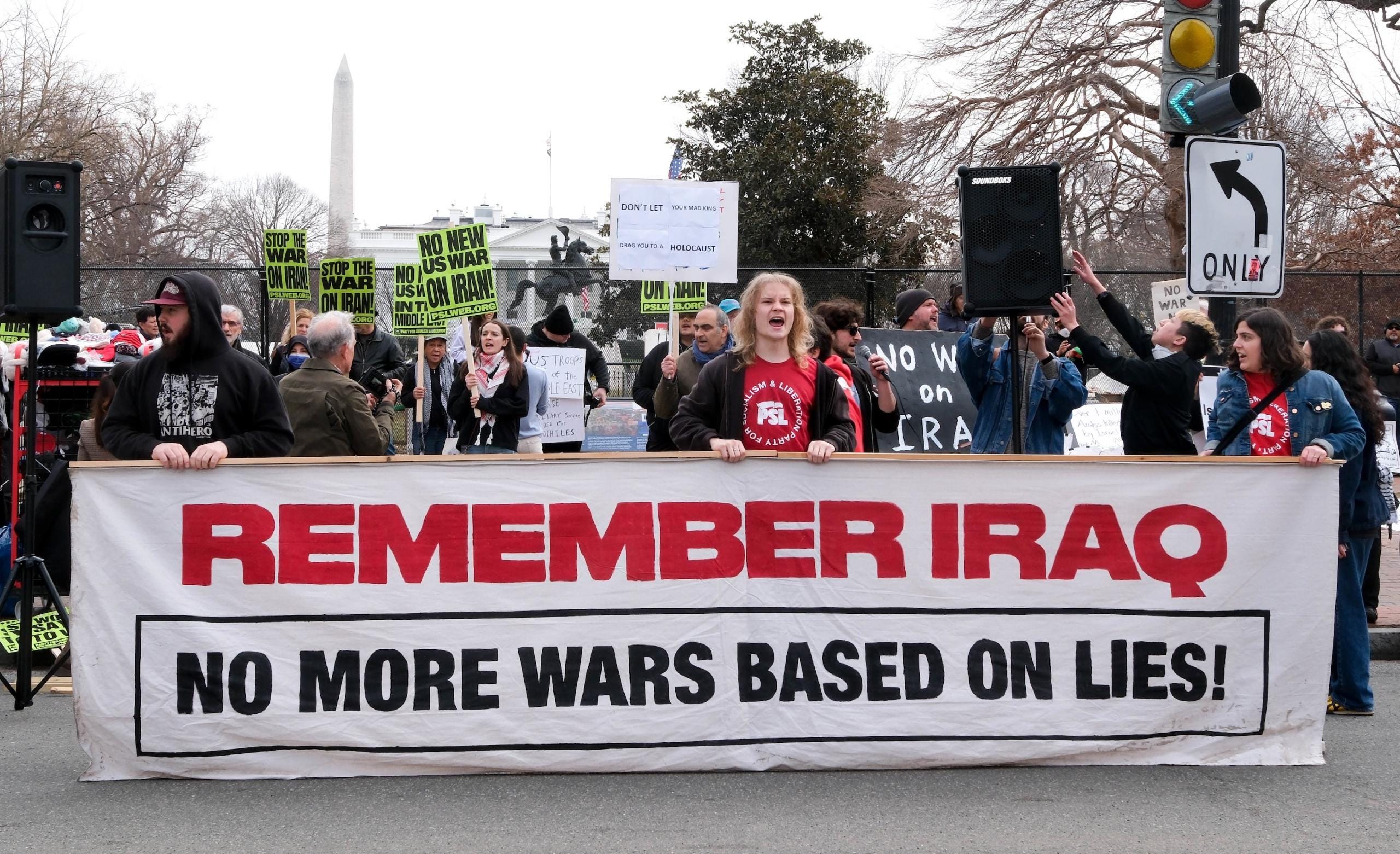
Photo courtesy of Victoria Pickering. Published under a Creative Commons license.