
Punk Against Unconditional Solidarity
Ruthless Cosmopolitan

By Ari Paul
A recurring theme in modern hasbara (Israel advocacy) is the portrayal of the publishing and music industries, and Hollywood, as increasingly Antisemitic, in response to Israel's genocide in Gaza.
It’s a striking accusation, given the prominent role Jews continue to play in the cultural industries—particularly in the United States—both as creators and as executives.
Yet this narrative has entered a new, more aggressive phase. Writing for the Jewish Telegraphic Agency, Sara Lim asserts that she is holding on to her love of the punk scene despite its alleged hostility to Jews.
Lim, a college newspaper editor in New Jersey, doesn’t quite say she has experienced overt Antisemitism in the scene that has become uniformly pro-Palestine, but rather silence about 7 October.
She says she met “the silence of people who had already decided that my grief did not fit their narrative”, adding that “writing became my way of refusing silence, of embodying something at once deeply Jewish and deeply punk”.
Lim goes on to cite one Jewish friend in the scene who “told me that at times he was concerned for his safety”, saying “I am fairly sure that I have been in spaces where I would have been harmed if people knew that I am a Zionist,” which has forced him to keep “[his] Judaism away from punk”.
It’s bad enough that we are once again at a point where Jewishness and Zionism are conflated without question, as if punk oppositionalism isn’t a battle against militarism, authoritarian governments and religious fundamentalism, traditional targets of punk rage.
But Lim defiantly proclaims she won’t separate her Jewishness from her love of punk and cites the Jewish roots of punk music and culture. Her brief history is not incorrect, but it is woefully incomplete.
Punk does not point its middle finger at the Israel Defence Forces, the settler movement and AIPAC, while finding solidarity with the victims of Israeli militarism, despite punk’s Jewish connections. It does so because of them.
The JTA article notes the Jewish origins of New York City’s now-departed CBGBs club, name-checking Ramones members and Richard Hell as Jewish forebears in New York City punk (tellingly, it doesn’t mention that the club’s owner, Hilly Kristal, was Jewish).
And while they were key to the free-wheeling, often apolitical side to the scene, there was a flipside with Reagan Youth, anarcho-communist anti-fascists led by the brilliant but troubled Dave Rubinstein (aka Dave Insurgent), whose ultimately deadly internal ghosts may well have been fueled by inherited Holocaust trauma.
Reagan Youth were not nearly as well known as the Dead Kennedys when it comes to sardonic left-punk, but the band had tremendous influence on New York City music, all the way up to the very Jewish Beastie Boys.
With songs that blasted US intervention in Central America and middle-class complacency in a time of global upheaval, we find it hard to believe this band would have anything but contempt for Bibi.
Jesse Michaels, lead singer of Operation Ivy, is the son of a famous writer. Michaels represented Berkeley, but his ancestral roots lie on New York’s Lower East Side. His “plea for peace” and call for “unity” are better suited to a democracy from the River to the Sea than to an ethnocracy.
Across the pond, Jewishness had less of an influence on punk culture and politics, but it’s there.
Clash guitarist Mick Jones recalled in The Guardian that he had been raised by his grandmother, who had “been born in 1899 to Jewish parents who’d escaped the Russian pogroms”, meaning “gefilte fish balls and salmon rissoles” were a part of his upbringing.
It’s easy to see the line from those pogroms to Jones and the Clash playing “White Riot” at the 1978 Anti-Nazi League concert in London with Jimmy Pursey of Sham 69–the same way Joe Strummer’s international childhood made the Clash’s music and political commitments truly global.
There’s no question where the writers of “Spanish Bombs” would stand on Gaza. Tommy Robinson, who would have been a poster child of everything Clash-aligned punks would have hated during that concert, is now firmly on Israel’s side.
What’s interesting about the JTA piece is that it is accompanied by a photo of the Barby, a punk club in Tel Aviv, yet it doesn’t teach its readers about Israeli punk or even identify the band in the image. God forbid they might be the anti-militarist band Jarada.
Like most punk scenes, the Israeli underground contains nationalist and right-wing elements, but it is full of iconoclastic rebels who have directed their fury at governments that have repeatedly prioritised war and hate over peace and multiculturalism.
Readers of Lim’s piece will apparently overlook a legendary Israeli hardcore band like Dir Yassin, named for a Palestinian Arab village ethnically cleansed by Jewish paramilitary forces in 1948. Imagine a Serbian anti-nationalist band calling itself Srebrenica. It’s no different.
Ka’tzon La’tevach, (Lambs to the Slaughter), put their anti-government message up front–their album covers are often in both Hebrew and Arabic. Their music is equally dramatic. Or take the militancy of a current band like Holocausts. Their name alone is a challenge - like Dir Yassin.
This is all in the same spirit as punks worldwide fighting terrible governments, from Myanmar’s Rebel Riot to Russia’s Pussy Riot. But it’s a hard ask for a community news service.
You’ll never get a serious piece of writing on the state of any underground music scene from them, even when they break rank like this with an opinion piece. It’s more a story for magazines and newspapers.
Lim tells us she’s upset that her grief after 7 October was never recognised by her community. That attack was undoubtedly horrific–nearly 1,200 Israelis were killed. But nearly every day since then, some version of 7 October has been visited upon Gaza, Lebanon and Iran in return.
If the JTA wants us to find a connection between honouring Jewish suffering and punk, then let’s look to an Argentinian punk band called Los Violadores, who used their music to resist the fascist Dirty War, a campaign of state terror that killed more Jews than on 7 October.
The military junta, like the Pinochet regime in Chile at the time, looked a lot like Israel’s garrison state today. Los Violadores or Reagan Youth aren’t just relics of the past–there’s a line of rage from them to the resistance of Ka’tzon La’tevach and the Holocausts.
No amount of Israel advocacy can change protest politics like this. The Jewish Telegraphic Agency would be better off finding a way to cover it than pretending it’s antisemitic.
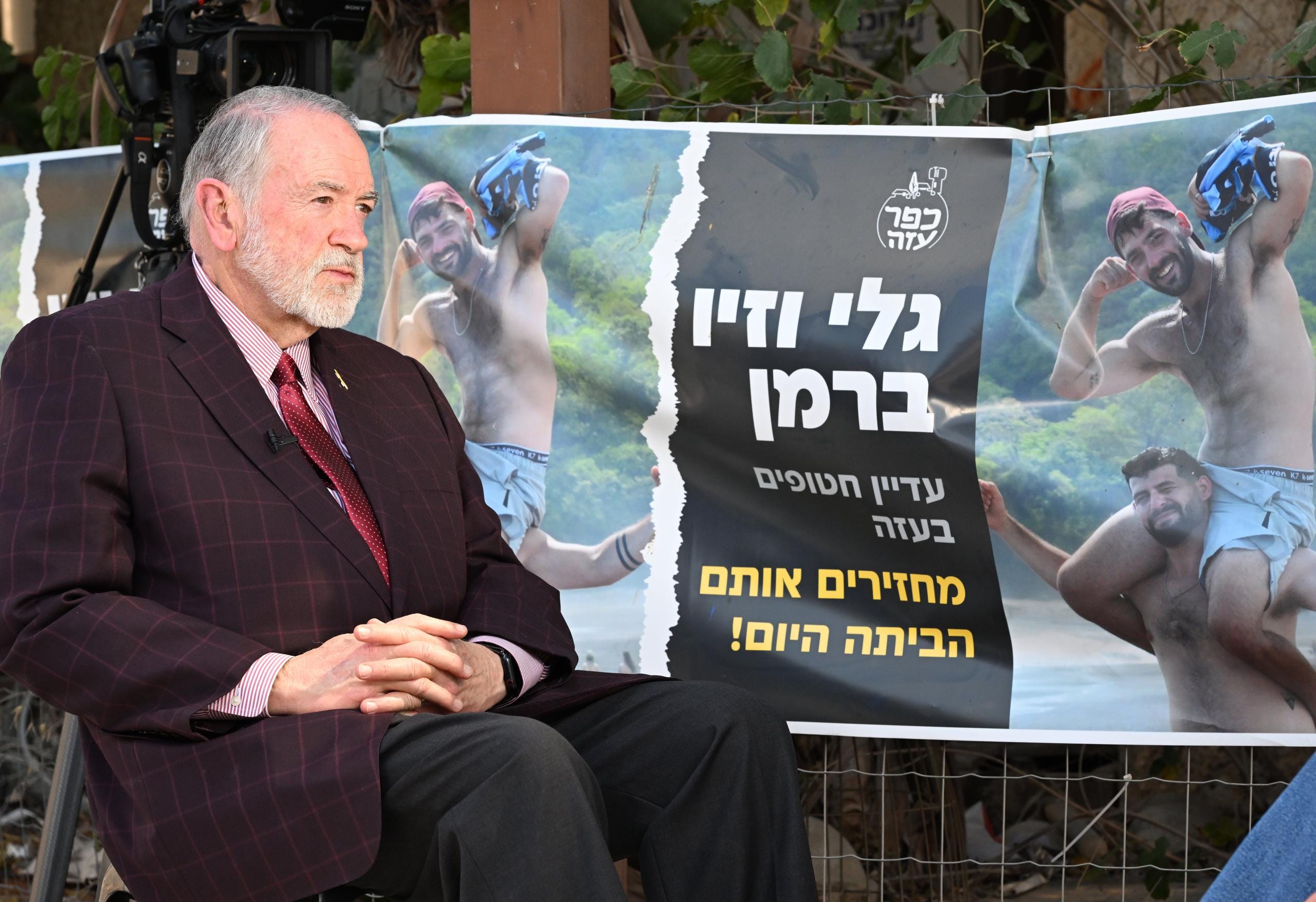
Photograph courtesy of US Embassy Jerusalem. Published under a Creative Commons license.