
Rape Without Revenge
Gaspar Noé’s Irréversible

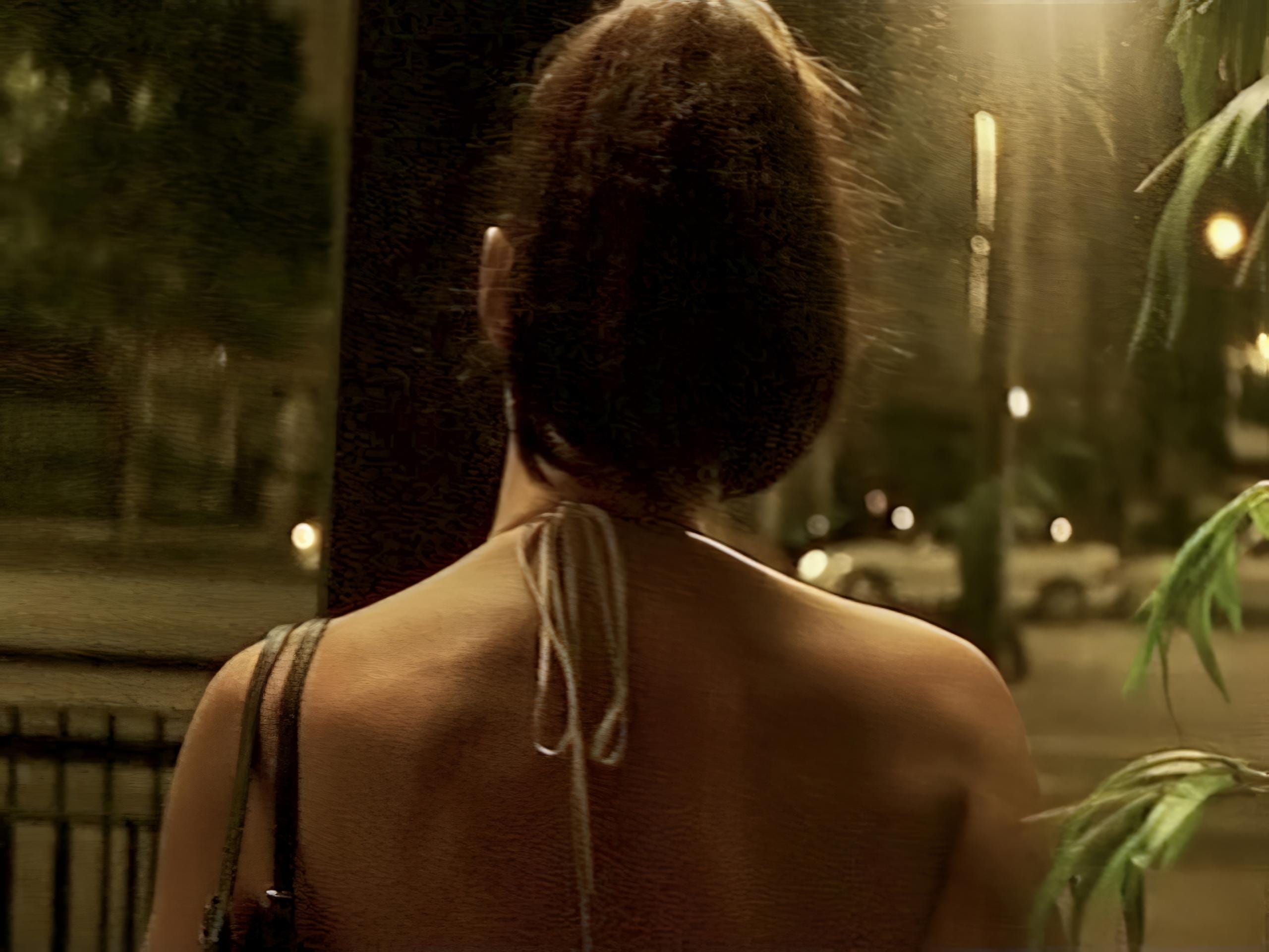
By Sage Cava
Extremely violent films are hard to classify as good. But Gaspar Noé’s 2002 crime thriller Irréversible makes a strong case.
What on earth would a good movie about graphic rape even look like? At the very least, Irréversible is well-crafted and effective in its purpose. And contrary to its reputation, it isn’t an exploitation film.
I first watched Irréversible when I was fifteen years old. Ploughing through lists of the most disturbing films of all time was one of my troubled and edgy teenage girl hobbies. And Irréversible seemed to appear on all of those lists.
Back then, I had yet to experience a serious physical threat. Now that I have watched Irréversible through the lens of personal danger, I recognise how effectively it simulates that kind of bodily terror, refusing to make light of it the way so many films do.
Films that revolve around unspeakable acts of violence tend to fall into two categories.
First, there are classic exploitation films, which cater to the audience’s bloodlust and are mostly unconcerned with form or concept.
Second, there are the high-concept counterparts to these films, which make some effort to civilise their subject matter without sacrificing its crude appeal: the violence is allegorical, satirical, and political.
Films that fall into this latter category ask the audience to reflect on what it all means, rather than relying solely on pure sensation. Nevertheless, thinking about what the violence means won’t deny moviegoers the perverse satisfaction of witnessing it.
Although Noé only decided to tell the story of Irréversible in reverse chronological order due to last-minute pressure from his financial backers, that is the most notorious aspect of the film, aside from its subject matter.
Combined with some pretty wild camerawork, particularly in the film’s opening minutes, this narrative gimmick assures that Irréversible will be placed in the second category.
Perhaps the efficacy of the gimmick draws our attention to something unsavoury in the film industry. But I don’t think that’s the case. The reverse chronology does impose a structural morality on Irréversible, making it more difficult to follow. And that difficulty impedes any perverse satisfaction that might derive from watching it.
If Irréversible does not follow the narrative structure of exploitation films, it also doesn’t attempt to theorise or otherwise impose meaning on its violence, as its high-concept brethren are wont to do. There is nothing explicitly allegorical, satirical, or political about the film’s subject matter. By the time it explicitly establishes any symbolism at all, it is already too late for all three main characters.
Irréversible is a classic rape-revenge narrative. It follows a couple, Alex and Marcus—played by real-life husband and wife Monica Bellucci and Vincent Cassel—and their friend Pierre (Albert Dupontel) through a night of horror in which Alex is savagely raped and beaten in a pedestrian underpass on her way home from a party.
Marcus decides to take his own revenge against the perpetrator, a pimp known as Le Ténia. Followed by Pierre, who makes futile attempts to reason with him, Marcus hunts him in a gay club called Rectum, where he is beaten and nearly raped. Pierre interrupts and murders the man Marcus believes to be Le Ténia.
Because the film is told in reverse, it is not until the rape scene that the futility of this revenge is revealed: Pierre kills the wrong man.
Irréversible isn’t psychological horror. It wants to affect the spectator’s body as much as their mind. Noé does his best to simulate the most primal and pure of fears: that something terrible is going to happen to your body and you will be helpless to stop it.
The distinctive camerawork of Noé and Benoît Debie is the most crucial factor in compelling the audience to experience adrenaline, dissociation, and, above all, fear alongside Alex, Marcus, and Pierre. It mimics the characters’ moods and actions: rising and falling with their footsteps, pointing and pummeling with their hands, looking where they look.
With Marcus, high out of his mind on coke and rage, the camera is frenetic, erratic. With Alex, pinned and helpless during her rape, it is paralysed and brought as low as she is. Its movement also communicates the passage of time, pinwheeling from “after” to “before” at the end of each scene.
“After” begins on the streets of Paris, where the camera settles into a handheld tracking shot at the heels of Marcus as he ventures into Rectum. The club is a hellish space illuminated intermittently only by dim, flesh-warm light.
While continuously reorienting to Marcus’s back, in the end, the camera frequently swings, handheld, to expose the nude or mostly nude patrons Marcus interrogates. Genitalia, torsos strapped in leather, and nude buttocks flash into view like jump-scares in a found-footage horror movie.
All this male nudity could very easily seem gratuitous, silly, or even camp. Still, Noé’s filmmaking style is so physically nauseating that everything the film touches becomes imbued with dread, men in leather included. Knowing what’s to come makes all the nudity especially ominous, a force of disorientation and dread.
Irréversible’s reputation is founded on two scenes: the rape of Alex and the fire extinguisher murder. The events between them are challenging to follow, especially with the camera swinging in every direction. Only if spectators have heard about the film before seeing it does this confusing content make sense: Irréversible’s reputation is a lighthouse in an otherwise unnavigable sea.
The first of these two scenes is the murder, committed by Pierre in Rectum. Pierre, who we will learn has spent hours trying to convince Marcus that revenge is not the answer, succumbs to his own rage and bludgeons the man he thinks is Alex’s rapist to death with the club’s fire extinguisher.
Once again, the driving force behind the murder’s nastiness is the camera. Having thus far only tracked and wheeled with Marcus, it now strikes like a snake, mirroring each of Pierre’s blows with the fire extinguisher as his victim’s face collapses under the barrage, pushed into the corner of the screen by the onslaught.
At one point, the camera flips the scene upside down and then back around again as Pierre gains momentum, sinking inexorably into the kind of atavistic violence his words have been trying to dissuade Marcus from committing. All the while, a track of buzzing, relentless sirens pulses behind the sound of metal hitting flesh.
Interestingly, Alex’s rape scene is the first moment where Noé chooses to keep the camera steady. This is another reason why Irréversible’s reverse chronology is effective at drawing a line between rape and exploitation.
The camera’s sudden steadiness, arriving after a good fifty minutes of handheld acrobatics, feels paralysing rather than comfortingly stable. The camera drops to ground level when Alex herself is forced down and stays there for the infamous duration of the assault—nearly ten minutes of screen time—now an immovable eye rather than an unstoppable agent of chaos.
Bellucci had complete control over how far she was willing to go in this scene. And she was willing to go a long way. Noé seems to withhold her beauty from the camera deliberately. Le Ténia covers Alex’s body and face for the duration of the rape. She faces the audience head-on, heavily foreshortened with his hand over her mouth, her eyes and her hands the clearest windows to her desperation and agony.
There are no sirens here, no non-diegetic sound to soften the rape or make it more “cinematic”, nothing but the sounds of the characters themselves. At one point, a shadowy figure appears silently in the background. He witnesses what is happening, then leaves without taking action. Then again, so does the audience.
Noé only shows Alex from one angle. There is no smorgasbord of degrading positions such as those afforded the character of Jennifer in I Spit on Your Grave (1978). Alex is not a specifically beautiful woman being raped, as is so often the case in the rape-revenge genre.
Alex could be any woman. She does nothing wrong. Her only mistake is to pick the underpass as her path home, the wrong place at the wrong time, where she runs into the wrong person. But she lacks the audience’s hindsight. She doesn’t know that descending into the tunnel is as good as descending into hell.
The tunnel is Irréversible’s one truly figurative space, signifying the rectum of the club’s name. That’s why the tunnel must come after Rectum in the story to achieve its full allegorical purpose, because the aggressive maleness of Rectum renders the tunnel, its mirror, similarly masculine in menace. Only by following Rectum is the tunnel able to complicate the sexual difference typically found in horror films.
It is typically the female body that serves as an object of both fetish and revulsion, its sexual architecture enterable yet unseeable and thereby suggesting the realms of the erotic or uncanny.
Irréversible inverts this from the get-go inside Rectum by establishing a malevolent interior space as symbolically male, anal rather than vaginal. It is impossible not to compare the tunnel, blood-colored and possibly infinite, to the warm-toned, intestinal twists and turns the camera first takes into the bowels of Rectum.
This is yet another reason why Irréversible’s unique chronology is so effective: Alex is trapped inside a space that is signified as male by virtue of its similarities to the film’s other space of violence. The tunnel also serves a premonitory function, though the premonition comes too late: Alex dreams of walking inside a red tunnel that splits in two.
Even in a conventionally chronological telling, anyone familiar enough with the film to be watching it in the first place would already know what that dream means. Noé himself rereleased such a version in 2023, calling it a “straight cut”, with all that implies. But whereas in this version Alex’s dream risks turning her rape into an object of symbolic suspense, when it comes afterwards, it only serves as a useless epilogue for absolute despair.
The crushing futility of Irréversible is best communicated when treated as a premise, not a revelation. When the futility is the premise, the violence embedded within it seems neither gluttonous nor gleeful, nor is it satiating for the audience to consume.
Some spectators may—and do—fail to watch the whole movie, understandably refusing to endure it. In other famous “walk-out” movies, the normies leave, and the gorehounds and edgelords enjoy their promised good time. Irréversible, by contrast, does its best to keep even the audience that stays unwilling.
There is no good time in Irréversible. When I watched the film at the age of fifteen, it was by helpless compulsion more than by active choice. And that was true this time as well.
Noé does his best to hold spectators hostage to their bloodlust, knowing they will consume the violence Irréversible provides even when there is clearly no meaning, value, or satisfaction in it, like sharks eating metal after expecting flesh.
That is how I felt the first time I watched, and the feeling remained this time: glutted on something devoid of nourishment. Which is exactly how this kind of violence, so easily and often taken lightly when it unfolds on a screen, should feel: indigestible, unendurable, and mortally terrifying.
Screenshot courtesy of Mars Films. All rights reserved.