
Undermining the British Left
The Corbyn-Sultana Drama

By Josh White
Instead of inspiring confidence and hope in the British left, its latest party is having the opposite effect.
The party’s leaders, Jeremy Corbyn and Coventry South MP Zarah Sultana, seem to have been at odds from the start.
Temporarily named Your Party—to distinguish it from Labour, which is not—its troublesome beginnings testify to a personal disagreement about what mass democracy means.
What’s holding Your Party back is the question of party form. Traditionally, political parties are organised centrally with one leader and a programme drafted by their team in consultation with the membership.
That’s not how Your Party got started. Technically, it isn’t even a political party yet, but a private company with Corbyn and Sultana listed as directors, its only asset a mailing list of 800,000 supporters.
Sultana jumped the gun by sending out an email asking supporters to sign up through a membership portal. Although this move registered 20,000 people, Corbyn and his allies claimed it was unauthorised.
Then Corbyn’s team sent out another email to supporters telling them not to sign up and warning those who already had to cancel direct debiting of their membership fees.
A war of words ensued on social media with Sultana claiming she had been ‘frozen out’ by “a sexist boys’ club.”
Both sides have sought legal advice, with Corbyn’s team reporting the incident to the Information Commissioner’s Office and Sultana threatening legal action for defamation by critics making “baseless attacks” against her character.
Although Sultana later issued a conciliatory statement, dropping her threat of legal action and emphasising the need to “make this work,” many British leftists are still reeling from the conflict. How could things get out of hand so quickly?
The simplest explanation is that Corbyn has favoured caution and attention to protocol, while Sultana just wants to get going.
This drama has been going on for months now.
First, Sultana jumped the gun by announcing the plan to found a party before Corbyn was ready. Then she did the same with the membership drive.
But the conflict is about more than just pacing.
Corbyn’s team seems much more cautious than Sultana’s about recruiting new members and empowering them to shape the party in their own way.
This raises troubling questions for recovering Corbynistas like me. It has been over ten years since Jeremy Corbyn was elected Labour leader.
No matter how much we respect and admire him, we are long overdue for an honest discussion about the flaws of his leadership.
In light of how rough the debut of Your Party has been, now is as good a time as ever.
First As Tragedy
A week may be a long time in politics, but a decade is two lifetimes in Westminster.
In 2015, Corbyn won a huge mandate with almost 60% of 250,000 Labour members voting for his leadership, dwarfing even Tony Blair’s 1994 victory.
It's worth taking a moment to recall the context for this victory. David Cameron was still PM and Britain was still in the EU.
The Tories were riding high, having won a majority at the general election. And Nigel Farage was still locked out of Parliament as UKIP leader.
Corbyn surprised everyone just by standing for Labour’s leadership election. The mainstream media wants you to believe his victory was a freak occurrence with no basis in anything other than collective madness.
During Corbyn’s four years at the helm, he was often playing a defensive game against the unrelenting negativity directed at him. Corbyn, the man, ended up being defined by narratives about Antisemitism and Brexit promulgated on the right.
That’s why it’s easy to imagine him being fiercely loyal to those who stood by him during those difficult years.
After all, Corbyn and his family often bore the brunt of abuse and threats. Yet the mainstream media expressed little concern for their physical safety and mental well-being.
Except when he was campaigning, Corbyn was far from a decisive and swift leader. His tenure was defined by dithering and heel-dragging over major issues. And he was easily slandered precisely because he lacked a media strategy.
To be fair, the Corbyn project was besieged on all sides by the Labour right, by the Tory government and by the British media. Lots of Labour members—perhaps too many—were willing to cut Corbyn a lot of slack because of the way he was vilified and sabotaged.
We can’t attribute all the errors and failings to enemy forces, though. Just as now, Corbyn was evasive when he needed to take a strong stance and slow to respond when he needed to be quick.
This is how the Corbyn project lost its hold on the insurgent space in just two years. Yes, Corbyn nearly won in 2017, but he also lost in 2019. Some of us who supported him may never get over those years, particularly the defeat.
We’re in a very different context now than we were in 2015.
The Tories are gone, and Keir Starmer’s Labour government is tanking in the polls. Farage looks stronger every day.
Somewhere, David Cameron is putting his trotters up. The state of left-wing politics today is also different, with Zack Polanski in charge of the Greens.
The debut of Your Party must be measured against this backdrop.
We should ask what this project can offer that the Greens can’t. It’s no accident that a growing number of Your Party supporters have decided the Greens are the best choice right now.
Many leftists argued that Your Party can’t possibly have an alliance with the Green Party because it would limit its radicalism.
Ironically, after the rupture between Corbyn and Sultana, it’s not even certain that the party will last long enough to stand in elections.
Then As Farce
Your Party supporters might find some comfort in Sultana’s conciliatory message on Sunday. It could signal that all sides are willing to work together for the greater good.
Sultana has positioned herself on the side of mass democracy within the party. But she now faces a great deal of animus for breaking ranks and causing a fuss. Some uncritical Corbyn fans are acting as though the debacle were all her fault.
The comforting narrative they tell themselves is that Zarah is young and impatient, while Jeremy is old and wise.
From their perspective, dawdling for months is obviously preferable to forming a party quickly and starting to campaign up and down the land.
It’s no accident that the problems with Your Party became acute after it released its plans for building towards a founding conference. Many supporters had already started organising fledgling branches across the country.
What these groups might do if Your Party fails is hard to say.
The UK is in a historic crisis after years of austerity and bad governance, heightened by the impact of Brexit and the pandemic. The stakes couldn’t be higher.
Tommy Robinson mobilised hundreds of thousands of followers to march through London, while Reform is poised to claim millions of votes. This isn’t the time to fuck it up, in the words of RS21.
Early polling suggested a new left-wing party could get 10% or even 15% of the voting public behind it. Other polling found Corbyn is more popular than Keir Starmer among Reform voters.
Your Party has a historic opportunity to build a mass party of the left with a war chest funded by a large membership. This is also why the question of party form is so crucial.
The problem is that the British left seems incapable of synthesising horizontalism and verticalism. Either we form a mock Leninist party that pretends it’s still 1914 or we opt for a non-organisation with an anarchist reading list.
No one can be the vanguard if everyone wants to be the vanguard. Horizontalism collapses into its opposite if there is no cohesive organisation with a sense of direction.
Sultana is right to favour more democracy in Your Party. She’s also right that we need a new party yesterday, making its rapid development our top priority.
Whether her actions have helped to make this happen is up for debate. No longer up against the Labour right, Jeremy Corbyn and Zarah Sultana are free to oppose each other. The same is true for their fans.
With Labour no longer a party for actually existing leftists, they are free to focus on old sectarian battles. Doing so would be disastrous, however.
Fiefdom politics could easily doom this attempt to establish a new leftist party. If it’s their party and not ours, then all is lost.
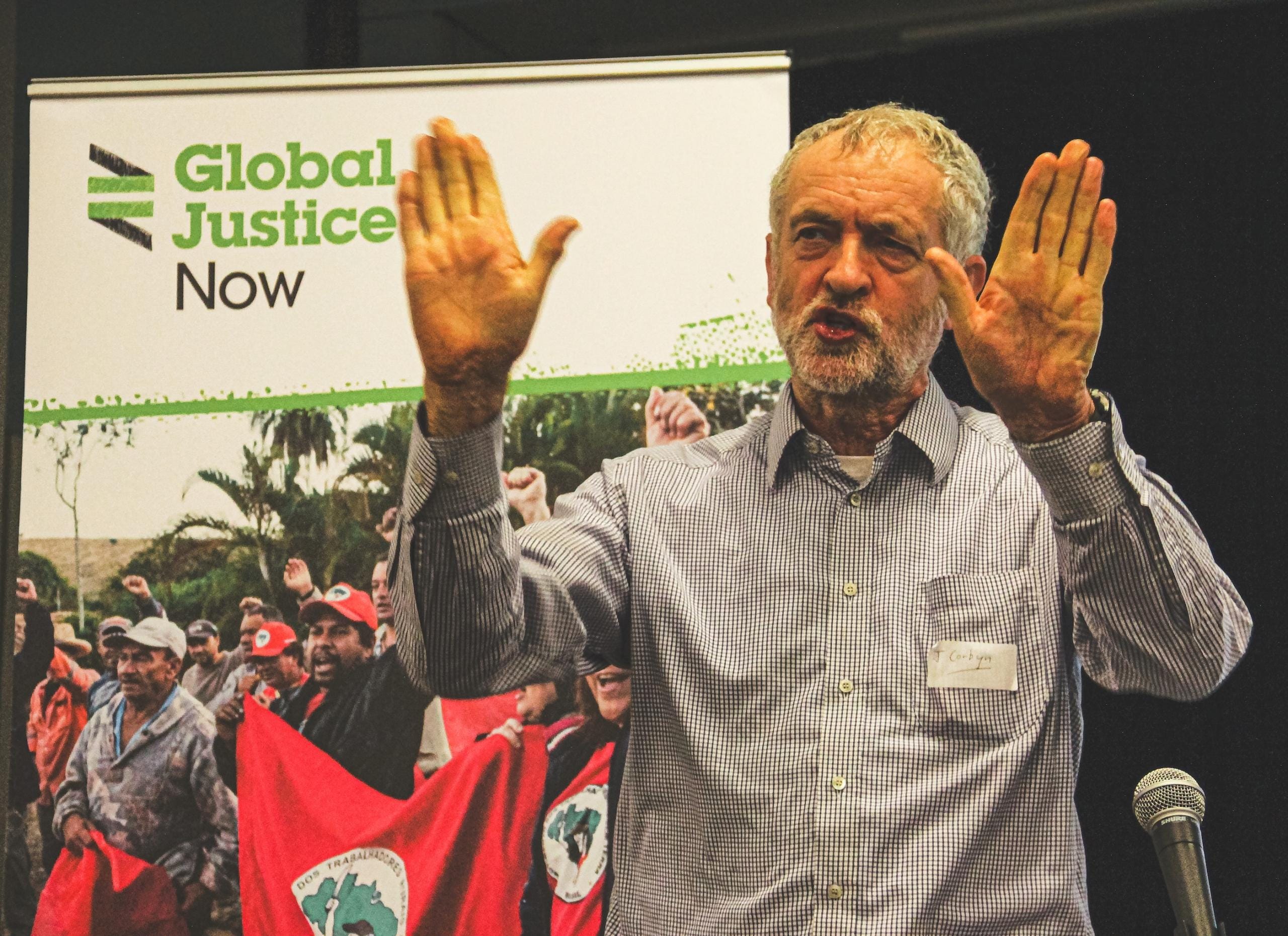
Photograph courtesy of Global Justice Now. Published under a Creative Commons license.
Well argued.